In addition to the recently formed institutes devoted to the study of world Christianity in the global south -- Calvin College's Nagel Institute for the Study of World Christianity and New York Theological Seminary's Center for World Christianity -- Saint Louis University professor Michael J. McClymond's vision, organizing, and collaboration led to the formation of The Institute for World Christianity. According to its website, the institute "exists to heal divisions and to promote mutual understanding and fruitful collaboration among Christian leaders from all cultures, regions, and traditions." In addition, the institute will hold a consulation for emerging church leaders in January.
Here's the blurb: "An important event in the life of the Institute is the annual Consultation for Emerging Leaders. The IWC week-long January consultation will be a select gathering up to 70 younger Christian leaders (mostly under 35 years of age) who will (1) pray and worship the Lord together, (2) listen to and learn from one another about what God is doing in churches throughout the world, and (3) develop new strategies and plans during the week for their own fields of ministry and Christian service. The food and housing costs in St. Louis will be met by the IWC, and, in most cases, the travel expenses to and from St. Louis will also be covered."
This is surely a notable development, and will not doubt lead to fruitful conversation, interesting collaboration, and continue the conversation about the multiform expressions of Christiainty in the global south.
Wednesday, September 13, 2006

Monday, July 24, 2006
Disputatio on Dissertating: Dispatches from the Archives
While this post is not really a "disputatio" in the formal sense, I suppose after I finish the dissertation my defense will be a disputatio. Nevertheless, now that I'm ABD (like another friend in the blogosphere), and thanks to generous funding from this department, it is time to travel to New England to comb the archives.
My dissertation examines the role of ministers in eighteenth-century New England (the Atlantic and Southern colonies as well), and looks specifically at pastoral dismissal, or "dismission" in eighteenth-century parlance. No scholar as yet has offered a critical analysis of eighteenth century dismissals, explusions partly due to the rising prominence of the legal profession, in addition to a growing consumer/market economy, not to mention theological contests, local church politics, sexual scandals, personality conflicts, and ministerial fatigue. While Jonathan Edwards' dismissal is no doubt the most well-known and best documented dismissal, I have identified a number of others. It also strikes me that pastoral dismissal as a theme in American religious history is something interesting to think about; there are certainly numerous examples of pulpit punts in the 19th and 20th centuries (and I'm sure many in this century).
I'll poke around in the archives at the Essex Museum, Harvard, Massachusetts Historical Society, and the American Antiquarian Society and then head west to the Jonathan Edwards Center at Yale and the Connecticut Historical Society, with a stop thereafter at the Historical Society of Pennsylvania to explore their colonial clergy holdings. Since I'm in the neighborhood, I also hope to visit the Hartford Institute for Religion Research as I continue working on two projects (one project with this sociologist) related to Joel Osteen, megachurches, and American religion.
I'll consume large, no, obscene amounts of coffee to have the energy to keep this itinerary and hope to see several friends (1, 2, and 3) along the way.
Saturday, April 29, 2006
A Suburban Theology
Interesting thoughts about spirituality and suburbia I'm still mulling over. Read and mull here.
And speaking of suburbia and spirituality, Albert Hsu has a forthcoming book with InterVarsity Press titled The Suburban Christian. It should be interesting, as is his blog.
Interested readers should also check out Kevin Kruse's White Flight: Atlanta and the Making of Modern Conservatism (Princeton UP, 2005). He teaches history at Princeton and there's a nice interview about the book on his webpage. Kruse draws important connections between the rise of suburbia, racism, and the emergence of right-wing politics. Such things fit hand in glove and he sets an important historical context that all should think critically about. Kruse is at work on a book about the Religious Right and also has a forthcoming collection of essays on what is called the new suburban history. Read more here.
Friday, April 28, 2006
Multiracial Churches and Sixth Americans
Read through Michael O. Emerson’s (with Rodney M. Woo) People of the Dream: Multiracial Congregations in the United States last night and today. It is a fabulous book that explores internal and external dynamics in the U.S., replete with (sometimes) dense sociological data and gripping accounts (some written by Rodney Woo) of personal and congregational transformation. Much of the data explains the history and life of Wilcrest Baptist Church, located in Houston.
Emerson chose to use multiracial instead of multicultural or multiethnic because he argues that the “fundamental cleavage” (fn2, p. 34) in the U.S. is race, not ethnicity. Therefore, “multiracial” more fully captures the immediacy of experiences people have in these congregations.
In terms of numbers, Emerson’s research shows that only about 7% of congregations in the U.S. could be described as multiracial, where “no one racial group comprises 80 percent or more of the people” (35). According to Emerson, the percentages decrease further when one examines Christianity in general, and then Protestantism in particular. Readers should spend time on chapter 2 particularly since it is here Emerson lays out a thoroughgoing but helpful explanation of the data he compiled and analyzed. He identifies various factors that contribute to or limit a congregation’s multiracial character, as well as important “pathways” (p. 161) to becoming racially diverse. I won’t belabor all of the statistical data; spend time reading it to illuminate the rest of the book. Chapter 7 offers a nice, crisp summary of the research as well.
From interviews and observations, Emerson identifies what he calls the “Sixth American” (99), a play off of David Hollinger’s Postethnic America (1995) which identifies 5 racial groups in the U.S, in essences 5 “types” (99) of Americans (Indian/Native American, African American/Black, European American/Black, Hispanic/Latino, and Asian American/Asian). Hollinger’s definitions note the cultural creation and meaning of “race.” Sixth Americans, in Emerson’s estimation, are individuals who are members of multiracial congregations, and those who intentionally pursue multiracial friendship and fellowship, in public and in private, on the job, and at church. As Emerson importantly points out, these people are Sixth Americans by “choice” (100).
This is an important point to make, and one I wish to highlight. At the present time, what little data exists on this particular question, I think it reveals intentionality toward community in these multiracial congregations. In sociological and historical terms, one might say that people in multiracial congregations deconstruct societal notions of race to reconstruct racial identity in the context of a community that affirms both individuals and structural forms of integration. In spiritual terms, Sixth Americans commit themselves to racial equality and all that it implies, taking Spirit-led risks to form a fabric of Christian community that takes time and patience to stitch, as different needles are used to thread the whole cloth. And needles will need to be carefully passed to future generations. That only 7% of U.S. congregations are multiracial (according to the data), means that very few people embrace a rigorous intentionality in terms of living a life of multiracial possibilities and existence.
George Yancey's One Body, One Spirit: Principles of Successful Multiracial Churches (2003), a book written using the same data Emerson accessed, has a good chapter on the concept and enactment of intentionality (pp. 108-117).
Emerson notes that multiracial congregations are in a “toddler stage” (160), but he does sense a “swelling momentum” (170) among and within these communities. After noting the unique nature of multiracial congregations when compared the entirety of America’s racialized, religious landscapes, Emerson strikes something of a prophetic, hopeful tone: “These congregations may be harbingers of a new stage of U.S. race relations” (193).
This book is a must read.
And, I end with a question: Are you a Sixth American? What stories can you share that will help us "see" the possibilites of being a Sixth American?
Speaking in Electronic Tongues: Pentecostalism's Centennial
Arlene Sanchez-Walsh, professor at Azusa Pacific University and chair of the Haggard School of Theology, just informed me that the fabulous radio show Speaking of Faith did a recent program on Pentecostalism. Check it out.
Friday, March 03, 2006
On Peace
My comrade over at Musings wrote this piece on peace. It is short, yet weighty, and simple, yet profound.
Wednesday, February 22, 2006
Moving Beyond Racial Gridlock and Embracing Mutual Responsibility
In a previous post I alerted readers to George Yancey’s forthcoming book, Beyond Racial Gridlock. I received my copy in the mail this afternoon, and read the book this evening.
Yancey argues that racial reconciliation will require intentional effort that demands honesty. He intriguingly references the issue of abortion to point out that religious faith informs that way some Christians reject this practice. If religious faith dictates one’s position with respect to abortion, Yancey asks why does religious faith not inform the way Christians view racism?
Yancey writes that “Racial issues are moral issues” (11) and spends the first five chapters delineating what he terms “secular models” of dealing with racism. Too often, Yancey argues, many Christians adopt secular models for addressing racism. These models are not wrong in and of themselves, Yancey maintains, and each model has its strengths. Some are individualist in thrust, while others address structural modes of racism. The major problem, he asserts, is that these models are incomplete.
Yancey identifies four models:
a. Individualist models
1. the colorblindness model
2. the Anglo-conformity model
b. Structural models
3. multiculturalism model
4. white responsibility model
Yancey ably exposits each of these models, offers helpful sociological data to undergird his assertions, and provides a brief historical sketch of where, when, and how each model emerged. Yancey is charitable in that he finds something positive in each of these models, yet does not withhold criticism when identifying the inadequacies of each approach. Read the book for specifics, and check the footnotes for a load of helpful sources.
So, what are Yancey’s proposals to move beyond racial gridlock?
First, he says people must acknowledge humanity’s sin nature. This means that sin is at the root of racism, and that racism is therefore a moral problem. Further, to acknowledge human sin, Yancey points out, opens up the possibility for honesty in dealing with racism and extends grace where grace should be extended.
Yancey writes: “I want to start what I hope will be an ongoing Christian dialogue about how our faith can help us deal with the sin nature that gives rise to our racial problems” (85). He calls this approach the “mutual responsibility model” (78).
The mutual responsibility model involves the intentional actions and thoughts by both European Americans and racial minorities (Yancey’s categories of description). “The sins of both majority and minority group members contribute to our society’s racial conflicts, but that does not mean both groups have identical roles in the solution” (88). This perspective informs Yancey’s chapters on European Americans and racial minorities.
Yancey’s chapter on European Americans and sin nature offers a brief historical sketch of institutional racism, offering theft of Native American lands and white flight as two key examples. What should be the response to these institutional sins? Corporate repentance. While Yancey acknowledges that some whites are not racist like their ancestors, they do benefit from the racism of their ancestors in myriad ways. In the spirit of mutual responsibility, white folks must acknowledge this dimension of institutional sin and own up to what white privilege was and is. Yancey concludes: “The mutual responsibility model balances concerns about past sins with the need for healing in future relationships” (98).
Yancey’s chapter on racial minorities and sin nature again points to the different responsibilities European Americans and racial minorities have in the context of embracing a mutual responsibility approach to racial reconciliation. Yancey decries playing the race card, and argues that “[f]ew actions damage race relations more than playing the race card” (101). Yancey goes on to discuss reparations, noting that in theory the idea is worthy of pursuit, but that in the end an economic response to centuries of racism and economic inequality would work against any genuine talk of reconciliation. This is a critical part of this chapter, and invites serious reflection and discussion. Regarding the pursuit of justice, Yancey suggests that “loving interracial relationships” (107) provide a way to pursue justice effectively. As a corollary of corporate repentance, Yancey argues that racial minorities should respond with corporate forgiveness to white people. In addition, he discusses reconciliation between persons of color as well.
The upshot of these two chapters – strong, convincing, and prophetic – means that “[o]nly if whites and nonwhites take their responsibilities seriously can we overcome the effects of centuries of racial alienation” (112).
Yancey cites Jesus as the “ultimate reconciler” (113) for 3 reasons. First, Christ’s prayer on the eve of his execution included a petition for reconciliation. Second, as a majority member of society, Jesus pursued reconciliation with the woman at the well, affirming her dignity yet acknowledging and forgiving her sin. Second, as a minority member of society, Jesus asked a member of the oppressors (Matthew) to be a follower, and then challenged the centurion to pursue the life of faith. As a member of the oppressed minority in these cases, Jesus “embraced grace” toward the Roman oppressor. And the application: from a majority group position, Yancey concludes, Jesus challenges a quest to maintain a white status quo, and from a minority group position, Jesus challenges hatred and dismissal of white folks with the necessity of service and “loving intergroup relationships” (124) even while pursuing racial justice.
Yancey also has a good and thorough chapter on what he calls the “fear factor” in racial reconciliation: the fear whites have of being labeled racist for broaching conversations about race and the fear racial minorities have of being labeled troublemakers for consistently pointing out racial inequities. Yancey suggests that churches create safe places to honestly reveal and discuss fears, and challenges church leaders to devote the time necessary to help create these kinds of spaces.
In a powerful closing chapter, Yancey asks what a “Christian approach” to end racial alienation might look like. He offers an analogy from marriage (using his own marriage to make his points) to describe the nature of new relationships that must emerge, and discusses affirmative action. Finally, Yancey suggests four places to begin to end racial gridlock: multiracial congregations, social networks, political activism, and the responsibilities of both students and faculty at Christian schools and colleges to confront, challenge, and offer a new vision for the church’s racial future.
Beyond Racial Gridlock, by its author’s admission, is not a complete picture, but what he hopes is a true start to end racial alienation in a community whose founder prayed (and prays) for its unity.
Monday, February 20, 2006
Critical Reflection on Race
Maurice Broaddus offers his thoughts on a theology of slavery here and here (HT: Anthony). Andre Daley explains why he's postemergent here (HT: JazzTheo). And JazzTheo continues with insights on living a life of jazz theology, particularly probing the extent to which folks live a life of conformity to whiteness.
I've been reading some more of James Cone and a lot of James Baldwin lately, and there are some reflections stirring and some thoughts brewing......I'll post them at some point.
Imperative to Act: Sudan and Darfur
Tuesday, February 14, 2006
Sudan and Darfur in Houston
A Scandal of the Evangelical Mind, or an Outrageous Idea (in) Christian Scholarship?
In his justly famous Scandal of the Evangelical Mind, historian Mark Noll makes this hopeful observation with respect to evangelicalism's future: "Evangelicals who believe that God desires to be worshiped with thought as well as activity may well remain evangelicals, but they will find intellectual depth – a way of praising God through the mind – in ideas developed by confessional or mainline Protestants, Roman Catholics, or perhaps even the Eastern Orthodox" (p. 239).
Since writing these words, Noll has written a very important book on evangelical engagement with Roman Catholicism, and is now moving to one of the premier Roman Catholic schools in the United States (Notre Dame) to replace his friend and colleague George Marsden. (HT: Steve Bush)
Perhaps Maxie Birch's fine book The Evangelical Historians: The Historiography of George Marsden, Nathan Hatch, and Mark Noll will appear in a second edition and Roman Catholic-Evangelical dialogue will continue to remain rigorous and interesting.
Sunday, January 08, 2006
Caught in a Webb and Liking It
 While I don't customarily offer musical commentary here, Derek Webb's new CD Mockingbird has prompted some reflections.
In short, Webb is something of a prophetic voice within evangelical Christianity, and I'd like to offer several comments.
1. In a way, he puts Mark Noll's Scandal of the Evangelical Mind to music in "A New Law." About the wider evangelical world in the United States and its attendant subculture Webb sings:
"...don’t teach me about politics and government, just tell me who to vote for; don’t teach me about truth and beauty, just label my music; don’t teach me how to live like a free man, just give me a new law i don’t wanna know if the answers aren’t easy, so just bring it down from the mountain to me..."
2. In "A King and a Kingdom" and "Rich Young Ruler" Webb roundly condemns the contradictory politics of many conservative evangelicals, and offers his own take on the matter:
(Chorus)
my first allegiance is not to a flag, a country, or a man
my first allegiance is not to democracy or blood
it's to a king & a kingdom
there are two great lies that i’ve heard:
“the day you eat of the fruit of that tree, you will not surely die”
and that Jesus Christ was a white, middle-class republican
and if you wanna be saved you have to learn to be like Him
"Rich Young Ruler"
poverty is so hard to see, when it’s only on your tv and twenty miles across town;
where we’re all living so good, that we moved out of Jesus’ neighborhood;
where he’s hungry and not feeling so good, from going through our trash;
he says, more than just your cash and coin
i want your time, i want your voice
i want the things you just can’t give me....
because what you do to the least of these
my brother’s [sic], you have done it to me
because i want the things you just can’t give me
3. Finally, Webb weighs in on U.S. foreign policy and seems to take aim at George W. Bush in "My Enemies Are Men Like Me":
how can i kill the ones i’m supposed to love
my enemies are men like me
i will protest the sword if it’s not wielded well
my enemies are men like me
peace by way of war is like purity by way of fornication
it’s like telling someone murder is wrong
and then showing them by way of execution
when justice is bought and sold just like weapons of war
the ones who always pay are the poorest of the poor
Interestingly enough, toward the end of this song Martin Luther King's voice emerges, and Webb includes clips from King's 1964 Nobel Prize acceptance speech: "nonviolence is the answer to the moral and poitical questions of our time: the need for man to overcome oppression and violence without resorting to oppression and violence."
4. Webb's Mockingbird is not sophisticated musically, though it is pleasantly simple; it has a rich yet pedestrian quality about it, and possesses the edginess of Donald Miller's Blue Like Jazz; it displays the social consciousness of a Sojourners, and offers a social commentary akin to a Stanley Hauerwas or Brian McLaren (who, by the way, endorse the CD).
Listen, and listen often.
Thursday, January 05, 2006
Forthcoming Book to Read, 2
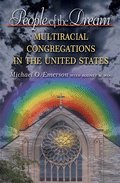
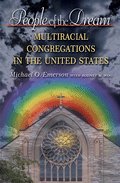 From Princeton University Press:
It is sometimes said that the most segregated time of the week in the United States is Sunday morning. Even as workplaces and public institutions such as the military have become racially integrated, racial separation in Christian religious congregations is the norm. And yet some congregations remain stubbornly, racially mixed.
People of the Dream is the most complete study of this phenomenon ever undertaken. Author Michael Emerson explores such questions as: how do racially mixed congregations come together? How are they sustained? Who attends them, how did they get there, and what are their experiences? Engagingly written, the book enters the worlds of these congregations through national surveys and in-depth studies of those attending racially mixed churches. Data for the book was collected over seven years by the author and his research team. It includes more than 2,500 telephone interviews, hundreds of written surveys, and extensive visits to mixed-race congregations throughout the United States.
People of the Dream argues that multiracial congregations are bridge organizations that gather and facilitate cross-racial friendships, disproportionately housing people who have substantially more racially diverse social networks than do other Americans. The book concludes that multiracial congregations and the people in them may be harbingers of racial change to come in the United States.
Forthcoming Book to Read, 1
 From InterVarsity Press:
Christians have struggled with racial issues for centuries, and often inadvertently contribute to the problem. Many proposed solutions have been helpful, but these only take us so far. Adding to this complex situation is the reality that Christians of different races see the issues differently.
Sociologist George Yancey surveys a range of approaches to racial healing that Christians have used and offers a new model for moving forward. The first part of the book analyzes four secular models regarding race used by Christians (colorblindness, Anglo-conformity, multiculturalism and white responsibility) and shows how each has its own advantages and limitations. Part two offers a new "mutual responsibility" model, which acknowledges that both majority and minority cultures have their own challenges, tendencies, and sins to repent of, and that people of different races approach racial reconciliation and justice in differing but complementary ways.
Yancey's vision offers hope that people of all races can walk together on a shared path--not as adversaries, but as partners.
Monday, January 02, 2006
My Favorite Books of 2005
Click here to read "Thinking Back to 2005 in 2006: Reflections of a Historian."
Friday, December 30, 2005
Why It All Matters: Race and the Emergent Church
So, whiteness and white privilege; let’s review previous posts very quickly:
Labor historian David Roediger points out that many white people have never once thought that African Americans are expert observers of whiteness, and therefore know it and can identify it while many white people rarely think about why they think of themselves as white, let along investigate the ways in which they live life based on the assumption of white privilege.
Ralph Ellison’s 1970 article reminds readers that woven throughout America’s “heritage” are African and African American culture(s), and without them, America would not live up to its so-called “ideals” of freedom, etc.
Writing in the early 1990s, bell hooks, in her customarily engaging and critical way, comments on the ways in which white people never “see” black people in a white supremacist culture since a white “rhetoric…supplies a fantasy of whiteness.” She then references post-colonial theory that seeks to dismantle hegemonic discourses of oppression that perpetuate and encase societal expectations and “ideals” – in this case “white” customs and traditions.
James Baldwin insightfully enters a place that white people know, live in/with, yet rarely discuss but repeatedly enact – white guilt – and identifies dialogue as one way to begin a process of change.
Journalism scholar Robert Jensen offers his own definition of white privilege, as does feminist scholar Peggy McIntosh, musician Derek Webb, and finally, Robert Paul Wolff in his important Autobiography of an Ex-White Man (2005).
Finally, I narrate my own recent moment during which white privilege dominated the conversation, and importantly, resulted in a productive and positive exchange; it was a consciousness-raising moment.
I bring these threads of conversation up because I want to suggest that in Emergent conversations about diversity and multiculturalism, if they are to proceed forward with rigor and meaningful depth, a clear witness to whiteness and white privilege must be part of the discussion.
This is important, I believe, for at least five reasons:
1. Like it or not, the face of the Emergent church is largely white, and largely male. To be fair, this is partly a function of how the media present and discuss the movement/church, but it also reflects the reality of the movement’s leadership at this point in time.
2. Though global in orientation and global in scope, to more cogently and faithfully enact the gospel and participate in the Kingdom, the Emergent church in the U.S. must deal with the issue of race. This issue is part of the missional landscape of which the Emergent church is a part (more on this point below). As the Emergent church shares various interwoven threads of the larger evangelical quilt (to adopt a metaphor from Randall Balmer’s Mine Eyes Have Seen the Glory [1989]), larger, structural realities of evangelicalism matter for the Emergent church.
3. Recent research provides data that attest to the importance of the issues I raise. Based on sound scientific research, in Divided By Faith: Evangelical Religion and the Problem of Race in America (2000), Michael Emerson and Christian Smith find that despite paying lip service (sometimes) to interethnic initiatives, the political, social, and economics structures of evangelicalism and U.S. society result in white evangelicals perpetuating and supporting racial division. This manifests itself very often, the authors demonstrate, with white evangelicals (when they admit it) claiming that racial tensions are the result of individual conflicts, and shy away from acknowledging larger structural parameters of racism.
Consider this quote from Divided By Faith: “Like their forbears during Jim Crow segregation, who prescribed kindness toward people of other races, but did not challenge the Jim Crow system, present-day white evangelicals attempt to solve the race problem without shaking the foundations on which racialization is built. As long as they do not see or acknowledge the structures of racialization, they inadvertently contribute to them. And, insofar as they continue to give solutions that do not challenge racialization, they allow racial inequality and division to continue unabated” (132).
4. In a provocative article titled “The Economics of the Emerging Church,” James K.A. Smith baldly asks, “What’s the median income of a ‘new kind of Christian’”? “How bourgeois is the emerging church?” “What can we do to prevent the emerging church from being simply another bourgeois institution?” [Smith refers to the “emerging” church in the U.S.] In essence Smith points out that to “be” postmodern and to ask the sorts of cultural questions raised by the Emergent church implies a sort of privilege. “But how will the postmodern church reach those who’ve been on the underside of modernity?,” Smith asks. Smith positively notes the missional nature of the Emergent church and suggests that it has the potential to address “socio-economic structures that systematically disempower” places and peoples. A concern for these things in the North American context, Smith suggests, is not enough; the Emergent church must powerfully speak to exploitative socio-economic structures globally as well.
I deeply, deeply appreciate and embrace (what appear to be) Smith’s socialist analysis of the Emergent church; his comments resonate in important ways, and provide an opportunity to suggest that discussions of class come with conversations about race. If theology is praxis, as Gustavo Gutierrez and James Cone show, then both race and class deserve equal attention. The North American context (to say nothing of the global situations) demands it.
6. The missional character of the Emergent (Emerging) church suggests an orientation that is conscious of the embedded character of the Christian gospel and the importance of the particularities and situatedness of issues related to life in North America. And the most important issue at hand, I suggest, is race. Because the Emergent church is missional, and because of this (by definition) attuned to the particularities of the North American context, then the Emergent church must grapple with the issue of race in profound and radical ways if it is to faithfully carry out its missional tasks.
So, if my assessments in this series are accurate and if my suggestions are worthy of reflection, then what is to be done? What kind of educational/pedagogical (or ecclesial) initiatives must we undertake to begin the task(s) I propose? Any ideas or suggestions?
Here’s one, and I’m sure there are more.
Missional Thinking About Darfur
Hannah Im (HT: Allthings2all) offers this Advent reflection on Darfur. It is relevant anytime of the (Christian) year.
Thursday, December 29, 2005
Cybershuffle for 2006
My good friend Anthony Smith, who practices Pentecost and lives missionally as a Postmodern Negro, has a new blogspace here. You should read his blog often.
Friday, December 23, 2005
Bearing Witness to White Privilege: Further Reflections
In recent weeks I have had several conversations regarding race/race-ism/white privilege with a number of people, many of whom are white.
One of these conversations really stands out, as it exemplifies the assumption of white privilege, yet demonstrates the possibilities that (re)education about race and white privilege in America’s history might offer and what a willing heart/spirit/disposition (to learn) might bring.
Setting the scene: I am eating lunch with several people at a restaurant, and one of the people there is a white female in her 50’s, wealthy, politically conservative, patient, thoughtful, and also a Christian. This woman’s background includes family members who are racist, and who regularly use racial slurs towards non-whites. Not a regular witness to this aspect of such a familial orbit anymore, the woman about whom I write has a number of non-white friends, some very close, as well as a number of African American co-workers.
Through the course of our conversation over lunch, through the lens of race we discuss history, politics, the Christian church, and interpersonal dynamics – people’s personal or ethnic “space.” It was a lively conversation, and very interesting as well. As we finished our meals and as conversations were winding down, this woman remarked (paraphrasing): “I’m just at a point in my life now where race doesn’t matter to me; I mean, I don’t look at people as African American, etc., I just look at people as people. Though I grew up around racist people, I did not adopt their point of view, nor do I condone their slurs and inappropriate comments. A person’s race just doesn’t matter to me.”
Anyone who knows this woman and who heard this conversation knows that these comments are sincere: this woman truly does love people, and pours her heart out for people all the time.
Yet, with eyes to see, the subtlety of these comments is clear and visible: this woman, by virtue of her whiteness and by virtue of the fact that she takes comfort in not being personally racist, she can say that to her race doesn’t matter. As a white woman in her 50’s, as a white upper-middle-class woman, as a white female Christian, she has the privilege to say that race does not matter. Would her non-white friends who are in their 50’s (or any other age for that matter) say the same thing?
Here was my response (paraphrased): “But, that’s just it: from a privileged position of whiteness, white people can say race doesn’t matter because, most likely, being white has never cost you anything. In other words, in U.S. society, being white is a currency that is taken everywhere, it is a key that unlocks numerous doors, it is a welcome, open door to almost anything, anywhere – without undergoing questioning or interrogation, without assuming you harbor ill-will or malice, without suffering the inhumanity of suspicion because of one’s ethnicity. It is called white privilege. From this lofty position, it is always others who play the race card.”
I will never forget the look on this woman’s face; she realized after my response that, as a white woman [or person], she had the “privilege” to say that race doesn’t matter. For the first time in her life, I think, she realized not only what white privilege is, but what it means, and that it is something on which to reflect deeply and about which to think critically and educate robustly.
Do you have any stories to share?
Subscribe to:
Posts (Atom)