Interesting thoughts about spirituality and suburbia I'm still mulling over. Read and mull here.
And speaking of suburbia and spirituality, Albert Hsu has a forthcoming book with InterVarsity Press titled The Suburban Christian. It should be interesting, as is his blog.
Interested readers should also check out Kevin Kruse's White Flight: Atlanta and the Making of Modern Conservatism (Princeton UP, 2005). He teaches history at Princeton and there's a nice interview about the book on his webpage. Kruse draws important connections between the rise of suburbia, racism, and the emergence of right-wing politics. Such things fit hand in glove and he sets an important historical context that all should think critically about. Kruse is at work on a book about the Religious Right and also has a forthcoming collection of essays on what is called the new suburban history. Read more here.
Saturday, April 29, 2006

Friday, April 28, 2006
Multiracial Churches and Sixth Americans
Read through Michael O. Emerson’s (with Rodney M. Woo) People of the Dream: Multiracial Congregations in the United States last night and today. It is a fabulous book that explores internal and external dynamics in the U.S., replete with (sometimes) dense sociological data and gripping accounts (some written by Rodney Woo) of personal and congregational transformation. Much of the data explains the history and life of Wilcrest Baptist Church, located in Houston.
Emerson chose to use multiracial instead of multicultural or multiethnic because he argues that the “fundamental cleavage” (fn2, p. 34) in the U.S. is race, not ethnicity. Therefore, “multiracial” more fully captures the immediacy of experiences people have in these congregations.
In terms of numbers, Emerson’s research shows that only about 7% of congregations in the U.S. could be described as multiracial, where “no one racial group comprises 80 percent or more of the people” (35). According to Emerson, the percentages decrease further when one examines Christianity in general, and then Protestantism in particular. Readers should spend time on chapter 2 particularly since it is here Emerson lays out a thoroughgoing but helpful explanation of the data he compiled and analyzed. He identifies various factors that contribute to or limit a congregation’s multiracial character, as well as important “pathways” (p. 161) to becoming racially diverse. I won’t belabor all of the statistical data; spend time reading it to illuminate the rest of the book. Chapter 7 offers a nice, crisp summary of the research as well.
From interviews and observations, Emerson identifies what he calls the “Sixth American” (99), a play off of David Hollinger’s Postethnic America (1995) which identifies 5 racial groups in the U.S, in essences 5 “types” (99) of Americans (Indian/Native American, African American/Black, European American/Black, Hispanic/Latino, and Asian American/Asian). Hollinger’s definitions note the cultural creation and meaning of “race.” Sixth Americans, in Emerson’s estimation, are individuals who are members of multiracial congregations, and those who intentionally pursue multiracial friendship and fellowship, in public and in private, on the job, and at church. As Emerson importantly points out, these people are Sixth Americans by “choice” (100).
This is an important point to make, and one I wish to highlight. At the present time, what little data exists on this particular question, I think it reveals intentionality toward community in these multiracial congregations. In sociological and historical terms, one might say that people in multiracial congregations deconstruct societal notions of race to reconstruct racial identity in the context of a community that affirms both individuals and structural forms of integration. In spiritual terms, Sixth Americans commit themselves to racial equality and all that it implies, taking Spirit-led risks to form a fabric of Christian community that takes time and patience to stitch, as different needles are used to thread the whole cloth. And needles will need to be carefully passed to future generations. That only 7% of U.S. congregations are multiracial (according to the data), means that very few people embrace a rigorous intentionality in terms of living a life of multiracial possibilities and existence.
George Yancey's One Body, One Spirit: Principles of Successful Multiracial Churches (2003), a book written using the same data Emerson accessed, has a good chapter on the concept and enactment of intentionality (pp. 108-117).
Emerson notes that multiracial congregations are in a “toddler stage” (160), but he does sense a “swelling momentum” (170) among and within these communities. After noting the unique nature of multiracial congregations when compared the entirety of America’s racialized, religious landscapes, Emerson strikes something of a prophetic, hopeful tone: “These congregations may be harbingers of a new stage of U.S. race relations” (193).
This book is a must read.
And, I end with a question: Are you a Sixth American? What stories can you share that will help us "see" the possibilites of being a Sixth American?
Emerson chose to use multiracial instead of multicultural or multiethnic because he argues that the “fundamental cleavage” (fn2, p. 34) in the U.S. is race, not ethnicity. Therefore, “multiracial” more fully captures the immediacy of experiences people have in these congregations.
In terms of numbers, Emerson’s research shows that only about 7% of congregations in the U.S. could be described as multiracial, where “no one racial group comprises 80 percent or more of the people” (35). According to Emerson, the percentages decrease further when one examines Christianity in general, and then Protestantism in particular. Readers should spend time on chapter 2 particularly since it is here Emerson lays out a thoroughgoing but helpful explanation of the data he compiled and analyzed. He identifies various factors that contribute to or limit a congregation’s multiracial character, as well as important “pathways” (p. 161) to becoming racially diverse. I won’t belabor all of the statistical data; spend time reading it to illuminate the rest of the book. Chapter 7 offers a nice, crisp summary of the research as well.
From interviews and observations, Emerson identifies what he calls the “Sixth American” (99), a play off of David Hollinger’s Postethnic America (1995) which identifies 5 racial groups in the U.S, in essences 5 “types” (99) of Americans (Indian/Native American, African American/Black, European American/Black, Hispanic/Latino, and Asian American/Asian). Hollinger’s definitions note the cultural creation and meaning of “race.” Sixth Americans, in Emerson’s estimation, are individuals who are members of multiracial congregations, and those who intentionally pursue multiracial friendship and fellowship, in public and in private, on the job, and at church. As Emerson importantly points out, these people are Sixth Americans by “choice” (100).
This is an important point to make, and one I wish to highlight. At the present time, what little data exists on this particular question, I think it reveals intentionality toward community in these multiracial congregations. In sociological and historical terms, one might say that people in multiracial congregations deconstruct societal notions of race to reconstruct racial identity in the context of a community that affirms both individuals and structural forms of integration. In spiritual terms, Sixth Americans commit themselves to racial equality and all that it implies, taking Spirit-led risks to form a fabric of Christian community that takes time and patience to stitch, as different needles are used to thread the whole cloth. And needles will need to be carefully passed to future generations. That only 7% of U.S. congregations are multiracial (according to the data), means that very few people embrace a rigorous intentionality in terms of living a life of multiracial possibilities and existence.
George Yancey's One Body, One Spirit: Principles of Successful Multiracial Churches (2003), a book written using the same data Emerson accessed, has a good chapter on the concept and enactment of intentionality (pp. 108-117).
Emerson notes that multiracial congregations are in a “toddler stage” (160), but he does sense a “swelling momentum” (170) among and within these communities. After noting the unique nature of multiracial congregations when compared the entirety of America’s racialized, religious landscapes, Emerson strikes something of a prophetic, hopeful tone: “These congregations may be harbingers of a new stage of U.S. race relations” (193).
This book is a must read.
And, I end with a question: Are you a Sixth American? What stories can you share that will help us "see" the possibilites of being a Sixth American?
Speaking in Electronic Tongues: Pentecostalism's Centennial
Arlene Sanchez-Walsh, professor at Azusa Pacific University and chair of the Haggard School of Theology, just informed me that the fabulous radio show Speaking of Faith did a recent program on Pentecostalism. Check it out.
Friday, March 03, 2006
On Peace
My comrade over at Musings wrote this piece on peace. It is short, yet weighty, and simple, yet profound.
Wednesday, February 22, 2006
Moving Beyond Racial Gridlock and Embracing Mutual Responsibility
In a previous post I alerted readers to George Yancey’s forthcoming book, Beyond Racial Gridlock. I received my copy in the mail this afternoon, and read the book this evening.
Yancey argues that racial reconciliation will require intentional effort that demands honesty. He intriguingly references the issue of abortion to point out that religious faith informs that way some Christians reject this practice. If religious faith dictates one’s position with respect to abortion, Yancey asks why does religious faith not inform the way Christians view racism?
Yancey writes that “Racial issues are moral issues” (11) and spends the first five chapters delineating what he terms “secular models” of dealing with racism. Too often, Yancey argues, many Christians adopt secular models for addressing racism. These models are not wrong in and of themselves, Yancey maintains, and each model has its strengths. Some are individualist in thrust, while others address structural modes of racism. The major problem, he asserts, is that these models are incomplete.
Yancey identifies four models:
a. Individualist models
1. the colorblindness model
2. the Anglo-conformity model
b. Structural models
3. multiculturalism model
4. white responsibility model
Yancey ably exposits each of these models, offers helpful sociological data to undergird his assertions, and provides a brief historical sketch of where, when, and how each model emerged. Yancey is charitable in that he finds something positive in each of these models, yet does not withhold criticism when identifying the inadequacies of each approach. Read the book for specifics, and check the footnotes for a load of helpful sources.
So, what are Yancey’s proposals to move beyond racial gridlock?
First, he says people must acknowledge humanity’s sin nature. This means that sin is at the root of racism, and that racism is therefore a moral problem. Further, to acknowledge human sin, Yancey points out, opens up the possibility for honesty in dealing with racism and extends grace where grace should be extended.
Yancey writes: “I want to start what I hope will be an ongoing Christian dialogue about how our faith can help us deal with the sin nature that gives rise to our racial problems” (85). He calls this approach the “mutual responsibility model” (78).
The mutual responsibility model involves the intentional actions and thoughts by both European Americans and racial minorities (Yancey’s categories of description). “The sins of both majority and minority group members contribute to our society’s racial conflicts, but that does not mean both groups have identical roles in the solution” (88). This perspective informs Yancey’s chapters on European Americans and racial minorities.
Yancey’s chapter on European Americans and sin nature offers a brief historical sketch of institutional racism, offering theft of Native American lands and white flight as two key examples. What should be the response to these institutional sins? Corporate repentance. While Yancey acknowledges that some whites are not racist like their ancestors, they do benefit from the racism of their ancestors in myriad ways. In the spirit of mutual responsibility, white folks must acknowledge this dimension of institutional sin and own up to what white privilege was and is. Yancey concludes: “The mutual responsibility model balances concerns about past sins with the need for healing in future relationships” (98).
Yancey’s chapter on racial minorities and sin nature again points to the different responsibilities European Americans and racial minorities have in the context of embracing a mutual responsibility approach to racial reconciliation. Yancey decries playing the race card, and argues that “[f]ew actions damage race relations more than playing the race card” (101). Yancey goes on to discuss reparations, noting that in theory the idea is worthy of pursuit, but that in the end an economic response to centuries of racism and economic inequality would work against any genuine talk of reconciliation. This is a critical part of this chapter, and invites serious reflection and discussion. Regarding the pursuit of justice, Yancey suggests that “loving interracial relationships” (107) provide a way to pursue justice effectively. As a corollary of corporate repentance, Yancey argues that racial minorities should respond with corporate forgiveness to white people. In addition, he discusses reconciliation between persons of color as well.
The upshot of these two chapters – strong, convincing, and prophetic – means that “[o]nly if whites and nonwhites take their responsibilities seriously can we overcome the effects of centuries of racial alienation” (112).
Yancey cites Jesus as the “ultimate reconciler” (113) for 3 reasons. First, Christ’s prayer on the eve of his execution included a petition for reconciliation. Second, as a majority member of society, Jesus pursued reconciliation with the woman at the well, affirming her dignity yet acknowledging and forgiving her sin. Second, as a minority member of society, Jesus asked a member of the oppressors (Matthew) to be a follower, and then challenged the centurion to pursue the life of faith. As a member of the oppressed minority in these cases, Jesus “embraced grace” toward the Roman oppressor. And the application: from a majority group position, Yancey concludes, Jesus challenges a quest to maintain a white status quo, and from a minority group position, Jesus challenges hatred and dismissal of white folks with the necessity of service and “loving intergroup relationships” (124) even while pursuing racial justice.
Yancey also has a good and thorough chapter on what he calls the “fear factor” in racial reconciliation: the fear whites have of being labeled racist for broaching conversations about race and the fear racial minorities have of being labeled troublemakers for consistently pointing out racial inequities. Yancey suggests that churches create safe places to honestly reveal and discuss fears, and challenges church leaders to devote the time necessary to help create these kinds of spaces.
In a powerful closing chapter, Yancey asks what a “Christian approach” to end racial alienation might look like. He offers an analogy from marriage (using his own marriage to make his points) to describe the nature of new relationships that must emerge, and discusses affirmative action. Finally, Yancey suggests four places to begin to end racial gridlock: multiracial congregations, social networks, political activism, and the responsibilities of both students and faculty at Christian schools and colleges to confront, challenge, and offer a new vision for the church’s racial future.
Beyond Racial Gridlock, by its author’s admission, is not a complete picture, but what he hopes is a true start to end racial alienation in a community whose founder prayed (and prays) for its unity.
Yancey argues that racial reconciliation will require intentional effort that demands honesty. He intriguingly references the issue of abortion to point out that religious faith informs that way some Christians reject this practice. If religious faith dictates one’s position with respect to abortion, Yancey asks why does religious faith not inform the way Christians view racism?
Yancey writes that “Racial issues are moral issues” (11) and spends the first five chapters delineating what he terms “secular models” of dealing with racism. Too often, Yancey argues, many Christians adopt secular models for addressing racism. These models are not wrong in and of themselves, Yancey maintains, and each model has its strengths. Some are individualist in thrust, while others address structural modes of racism. The major problem, he asserts, is that these models are incomplete.
Yancey identifies four models:
a. Individualist models
1. the colorblindness model
2. the Anglo-conformity model
b. Structural models
3. multiculturalism model
4. white responsibility model
Yancey ably exposits each of these models, offers helpful sociological data to undergird his assertions, and provides a brief historical sketch of where, when, and how each model emerged. Yancey is charitable in that he finds something positive in each of these models, yet does not withhold criticism when identifying the inadequacies of each approach. Read the book for specifics, and check the footnotes for a load of helpful sources.
So, what are Yancey’s proposals to move beyond racial gridlock?
First, he says people must acknowledge humanity’s sin nature. This means that sin is at the root of racism, and that racism is therefore a moral problem. Further, to acknowledge human sin, Yancey points out, opens up the possibility for honesty in dealing with racism and extends grace where grace should be extended.
Yancey writes: “I want to start what I hope will be an ongoing Christian dialogue about how our faith can help us deal with the sin nature that gives rise to our racial problems” (85). He calls this approach the “mutual responsibility model” (78).
The mutual responsibility model involves the intentional actions and thoughts by both European Americans and racial minorities (Yancey’s categories of description). “The sins of both majority and minority group members contribute to our society’s racial conflicts, but that does not mean both groups have identical roles in the solution” (88). This perspective informs Yancey’s chapters on European Americans and racial minorities.
Yancey’s chapter on European Americans and sin nature offers a brief historical sketch of institutional racism, offering theft of Native American lands and white flight as two key examples. What should be the response to these institutional sins? Corporate repentance. While Yancey acknowledges that some whites are not racist like their ancestors, they do benefit from the racism of their ancestors in myriad ways. In the spirit of mutual responsibility, white folks must acknowledge this dimension of institutional sin and own up to what white privilege was and is. Yancey concludes: “The mutual responsibility model balances concerns about past sins with the need for healing in future relationships” (98).
Yancey’s chapter on racial minorities and sin nature again points to the different responsibilities European Americans and racial minorities have in the context of embracing a mutual responsibility approach to racial reconciliation. Yancey decries playing the race card, and argues that “[f]ew actions damage race relations more than playing the race card” (101). Yancey goes on to discuss reparations, noting that in theory the idea is worthy of pursuit, but that in the end an economic response to centuries of racism and economic inequality would work against any genuine talk of reconciliation. This is a critical part of this chapter, and invites serious reflection and discussion. Regarding the pursuit of justice, Yancey suggests that “loving interracial relationships” (107) provide a way to pursue justice effectively. As a corollary of corporate repentance, Yancey argues that racial minorities should respond with corporate forgiveness to white people. In addition, he discusses reconciliation between persons of color as well.
The upshot of these two chapters – strong, convincing, and prophetic – means that “[o]nly if whites and nonwhites take their responsibilities seriously can we overcome the effects of centuries of racial alienation” (112).
Yancey cites Jesus as the “ultimate reconciler” (113) for 3 reasons. First, Christ’s prayer on the eve of his execution included a petition for reconciliation. Second, as a majority member of society, Jesus pursued reconciliation with the woman at the well, affirming her dignity yet acknowledging and forgiving her sin. Second, as a minority member of society, Jesus asked a member of the oppressors (Matthew) to be a follower, and then challenged the centurion to pursue the life of faith. As a member of the oppressed minority in these cases, Jesus “embraced grace” toward the Roman oppressor. And the application: from a majority group position, Yancey concludes, Jesus challenges a quest to maintain a white status quo, and from a minority group position, Jesus challenges hatred and dismissal of white folks with the necessity of service and “loving intergroup relationships” (124) even while pursuing racial justice.
Yancey also has a good and thorough chapter on what he calls the “fear factor” in racial reconciliation: the fear whites have of being labeled racist for broaching conversations about race and the fear racial minorities have of being labeled troublemakers for consistently pointing out racial inequities. Yancey suggests that churches create safe places to honestly reveal and discuss fears, and challenges church leaders to devote the time necessary to help create these kinds of spaces.
In a powerful closing chapter, Yancey asks what a “Christian approach” to end racial alienation might look like. He offers an analogy from marriage (using his own marriage to make his points) to describe the nature of new relationships that must emerge, and discusses affirmative action. Finally, Yancey suggests four places to begin to end racial gridlock: multiracial congregations, social networks, political activism, and the responsibilities of both students and faculty at Christian schools and colleges to confront, challenge, and offer a new vision for the church’s racial future.
Beyond Racial Gridlock, by its author’s admission, is not a complete picture, but what he hopes is a true start to end racial alienation in a community whose founder prayed (and prays) for its unity.
Monday, February 20, 2006
Critical Reflection on Race
Maurice Broaddus offers his thoughts on a theology of slavery here and here (HT: Anthony). Andre Daley explains why he's postemergent here (HT: JazzTheo). And JazzTheo continues with insights on living a life of jazz theology, particularly probing the extent to which folks live a life of conformity to whiteness.
I've been reading some more of James Cone and a lot of James Baldwin lately, and there are some reflections stirring and some thoughts brewing......I'll post them at some point.
I've been reading some more of James Cone and a lot of James Baldwin lately, and there are some reflections stirring and some thoughts brewing......I'll post them at some point.
Imperative to Act: Sudan and Darfur
Tuesday, February 14, 2006
Sudan and Darfur in Houston
A Scandal of the Evangelical Mind, or an Outrageous Idea (in) Christian Scholarship?
In his justly famous Scandal of the Evangelical Mind, historian Mark Noll makes this hopeful observation with respect to evangelicalism's future: "Evangelicals who believe that God desires to be worshiped with thought as well as activity may well remain evangelicals, but they will find intellectual depth – a way of praising God through the mind – in ideas developed by confessional or mainline Protestants, Roman Catholics, or perhaps even the Eastern Orthodox" (p. 239).
Since writing these words, Noll has written a very important book on evangelical engagement with Roman Catholicism, and is now moving to one of the premier Roman Catholic schools in the United States (Notre Dame) to replace his friend and colleague George Marsden. (HT: Steve Bush)
Perhaps Maxie Birch's fine book The Evangelical Historians: The Historiography of George Marsden, Nathan Hatch, and Mark Noll will appear in a second edition and Roman Catholic-Evangelical dialogue will continue to remain rigorous and interesting.
Since writing these words, Noll has written a very important book on evangelical engagement with Roman Catholicism, and is now moving to one of the premier Roman Catholic schools in the United States (Notre Dame) to replace his friend and colleague George Marsden. (HT: Steve Bush)
Perhaps Maxie Birch's fine book The Evangelical Historians: The Historiography of George Marsden, Nathan Hatch, and Mark Noll will appear in a second edition and Roman Catholic-Evangelical dialogue will continue to remain rigorous and interesting.
Sunday, January 08, 2006
Caught in a Webb and Liking It
 While I don't customarily offer musical commentary here, Derek Webb's new CD Mockingbird has prompted some reflections.
In short, Webb is something of a prophetic voice within evangelical Christianity, and I'd like to offer several comments.
1. In a way, he puts Mark Noll's Scandal of the Evangelical Mind to music in "A New Law." About the wider evangelical world in the United States and its attendant subculture Webb sings:
"...don’t teach me about politics and government, just tell me who to vote for; don’t teach me about truth and beauty, just label my music; don’t teach me how to live like a free man, just give me a new law i don’t wanna know if the answers aren’t easy, so just bring it down from the mountain to me..."
2. In "A King and a Kingdom" and "Rich Young Ruler" Webb roundly condemns the contradictory politics of many conservative evangelicals, and offers his own take on the matter:
(Chorus)
my first allegiance is not to a flag, a country, or a man
my first allegiance is not to democracy or blood
it's to a king & a kingdom
there are two great lies that i’ve heard:
“the day you eat of the fruit of that tree, you will not surely die”
and that Jesus Christ was a white, middle-class republican
and if you wanna be saved you have to learn to be like Him
"Rich Young Ruler"
poverty is so hard to see, when it’s only on your tv and twenty miles across town;
where we’re all living so good, that we moved out of Jesus’ neighborhood;
where he’s hungry and not feeling so good, from going through our trash;
he says, more than just your cash and coin
i want your time, i want your voice
i want the things you just can’t give me....
because what you do to the least of these
my brother’s [sic], you have done it to me
because i want the things you just can’t give me
3. Finally, Webb weighs in on U.S. foreign policy and seems to take aim at George W. Bush in "My Enemies Are Men Like Me":
how can i kill the ones i’m supposed to love
my enemies are men like me
i will protest the sword if it’s not wielded well
my enemies are men like me
peace by way of war is like purity by way of fornication
it’s like telling someone murder is wrong
and then showing them by way of execution
when justice is bought and sold just like weapons of war
the ones who always pay are the poorest of the poor
Interestingly enough, toward the end of this song Martin Luther King's voice emerges, and Webb includes clips from King's 1964 Nobel Prize acceptance speech: "nonviolence is the answer to the moral and poitical questions of our time: the need for man to overcome oppression and violence without resorting to oppression and violence."
4. Webb's Mockingbird is not sophisticated musically, though it is pleasantly simple; it has a rich yet pedestrian quality about it, and possesses the edginess of Donald Miller's Blue Like Jazz; it displays the social consciousness of a Sojourners, and offers a social commentary akin to a Stanley Hauerwas or Brian McLaren (who, by the way, endorse the CD).
Listen, and listen often.
Thursday, January 05, 2006
Forthcoming Book to Read, 2
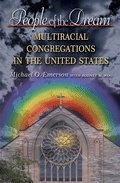 From Princeton University Press:
It is sometimes said that the most segregated time of the week in the United States is Sunday morning. Even as workplaces and public institutions such as the military have become racially integrated, racial separation in Christian religious congregations is the norm. And yet some congregations remain stubbornly, racially mixed.
People of the Dream is the most complete study of this phenomenon ever undertaken. Author Michael Emerson explores such questions as: how do racially mixed congregations come together? How are they sustained? Who attends them, how did they get there, and what are their experiences? Engagingly written, the book enters the worlds of these congregations through national surveys and in-depth studies of those attending racially mixed churches. Data for the book was collected over seven years by the author and his research team. It includes more than 2,500 telephone interviews, hundreds of written surveys, and extensive visits to mixed-race congregations throughout the United States.
People of the Dream argues that multiracial congregations are bridge organizations that gather and facilitate cross-racial friendships, disproportionately housing people who have substantially more racially diverse social networks than do other Americans. The book concludes that multiracial congregations and the people in them may be harbingers of racial change to come in the United States.
Forthcoming Book to Read, 1
 From InterVarsity Press:
Christians have struggled with racial issues for centuries, and often inadvertently contribute to the problem. Many proposed solutions have been helpful, but these only take us so far. Adding to this complex situation is the reality that Christians of different races see the issues differently.
Sociologist George Yancey surveys a range of approaches to racial healing that Christians have used and offers a new model for moving forward. The first part of the book analyzes four secular models regarding race used by Christians (colorblindness, Anglo-conformity, multiculturalism and white responsibility) and shows how each has its own advantages and limitations. Part two offers a new "mutual responsibility" model, which acknowledges that both majority and minority cultures have their own challenges, tendencies, and sins to repent of, and that people of different races approach racial reconciliation and justice in differing but complementary ways.
Yancey's vision offers hope that people of all races can walk together on a shared path--not as adversaries, but as partners.
Monday, January 02, 2006
My Favorite Books of 2005
Click here to read "Thinking Back to 2005 in 2006: Reflections of a Historian."
Friday, December 30, 2005
Why It All Matters: Race and the Emergent Church
So, whiteness and white privilege; let’s review previous posts very quickly:
Labor historian David Roediger points out that many white people have never once thought that African Americans are expert observers of whiteness, and therefore know it and can identify it while many white people rarely think about why they think of themselves as white, let along investigate the ways in which they live life based on the assumption of white privilege.
Ralph Ellison’s 1970 article reminds readers that woven throughout America’s “heritage” are African and African American culture(s), and without them, America would not live up to its so-called “ideals” of freedom, etc.
Writing in the early 1990s, bell hooks, in her customarily engaging and critical way, comments on the ways in which white people never “see” black people in a white supremacist culture since a white “rhetoric…supplies a fantasy of whiteness.” She then references post-colonial theory that seeks to dismantle hegemonic discourses of oppression that perpetuate and encase societal expectations and “ideals” – in this case “white” customs and traditions.
James Baldwin insightfully enters a place that white people know, live in/with, yet rarely discuss but repeatedly enact – white guilt – and identifies dialogue as one way to begin a process of change.
Journalism scholar Robert Jensen offers his own definition of white privilege, as does feminist scholar Peggy McIntosh, musician Derek Webb, and finally, Robert Paul Wolff in his important Autobiography of an Ex-White Man (2005).
Finally, I narrate my own recent moment during which white privilege dominated the conversation, and importantly, resulted in a productive and positive exchange; it was a consciousness-raising moment.
I bring these threads of conversation up because I want to suggest that in Emergent conversations about diversity and multiculturalism, if they are to proceed forward with rigor and meaningful depth, a clear witness to whiteness and white privilege must be part of the discussion.
This is important, I believe, for at least five reasons:
1. Like it or not, the face of the Emergent church is largely white, and largely male. To be fair, this is partly a function of how the media present and discuss the movement/church, but it also reflects the reality of the movement’s leadership at this point in time.
2. Though global in orientation and global in scope, to more cogently and faithfully enact the gospel and participate in the Kingdom, the Emergent church in the U.S. must deal with the issue of race. This issue is part of the missional landscape of which the Emergent church is a part (more on this point below). As the Emergent church shares various interwoven threads of the larger evangelical quilt (to adopt a metaphor from Randall Balmer’s Mine Eyes Have Seen the Glory [1989]), larger, structural realities of evangelicalism matter for the Emergent church.
3. Recent research provides data that attest to the importance of the issues I raise. Based on sound scientific research, in Divided By Faith: Evangelical Religion and the Problem of Race in America (2000), Michael Emerson and Christian Smith find that despite paying lip service (sometimes) to interethnic initiatives, the political, social, and economics structures of evangelicalism and U.S. society result in white evangelicals perpetuating and supporting racial division. This manifests itself very often, the authors demonstrate, with white evangelicals (when they admit it) claiming that racial tensions are the result of individual conflicts, and shy away from acknowledging larger structural parameters of racism.
Consider this quote from Divided By Faith: “Like their forbears during Jim Crow segregation, who prescribed kindness toward people of other races, but did not challenge the Jim Crow system, present-day white evangelicals attempt to solve the race problem without shaking the foundations on which racialization is built. As long as they do not see or acknowledge the structures of racialization, they inadvertently contribute to them. And, insofar as they continue to give solutions that do not challenge racialization, they allow racial inequality and division to continue unabated” (132).
4. In a provocative article titled “The Economics of the Emerging Church,” James K.A. Smith baldly asks, “What’s the median income of a ‘new kind of Christian’”? “How bourgeois is the emerging church?” “What can we do to prevent the emerging church from being simply another bourgeois institution?” [Smith refers to the “emerging” church in the U.S.] In essence Smith points out that to “be” postmodern and to ask the sorts of cultural questions raised by the Emergent church implies a sort of privilege. “But how will the postmodern church reach those who’ve been on the underside of modernity?,” Smith asks. Smith positively notes the missional nature of the Emergent church and suggests that it has the potential to address “socio-economic structures that systematically disempower” places and peoples. A concern for these things in the North American context, Smith suggests, is not enough; the Emergent church must powerfully speak to exploitative socio-economic structures globally as well.
I deeply, deeply appreciate and embrace (what appear to be) Smith’s socialist analysis of the Emergent church; his comments resonate in important ways, and provide an opportunity to suggest that discussions of class come with conversations about race. If theology is praxis, as Gustavo Gutierrez and James Cone show, then both race and class deserve equal attention. The North American context (to say nothing of the global situations) demands it.
6. The missional character of the Emergent (Emerging) church suggests an orientation that is conscious of the embedded character of the Christian gospel and the importance of the particularities and situatedness of issues related to life in North America. And the most important issue at hand, I suggest, is race. Because the Emergent church is missional, and because of this (by definition) attuned to the particularities of the North American context, then the Emergent church must grapple with the issue of race in profound and radical ways if it is to faithfully carry out its missional tasks.
So, if my assessments in this series are accurate and if my suggestions are worthy of reflection, then what is to be done? What kind of educational/pedagogical (or ecclesial) initiatives must we undertake to begin the task(s) I propose? Any ideas or suggestions?
Here’s one, and I’m sure there are more.
Labor historian David Roediger points out that many white people have never once thought that African Americans are expert observers of whiteness, and therefore know it and can identify it while many white people rarely think about why they think of themselves as white, let along investigate the ways in which they live life based on the assumption of white privilege.
Ralph Ellison’s 1970 article reminds readers that woven throughout America’s “heritage” are African and African American culture(s), and without them, America would not live up to its so-called “ideals” of freedom, etc.
Writing in the early 1990s, bell hooks, in her customarily engaging and critical way, comments on the ways in which white people never “see” black people in a white supremacist culture since a white “rhetoric…supplies a fantasy of whiteness.” She then references post-colonial theory that seeks to dismantle hegemonic discourses of oppression that perpetuate and encase societal expectations and “ideals” – in this case “white” customs and traditions.
James Baldwin insightfully enters a place that white people know, live in/with, yet rarely discuss but repeatedly enact – white guilt – and identifies dialogue as one way to begin a process of change.
Journalism scholar Robert Jensen offers his own definition of white privilege, as does feminist scholar Peggy McIntosh, musician Derek Webb, and finally, Robert Paul Wolff in his important Autobiography of an Ex-White Man (2005).
Finally, I narrate my own recent moment during which white privilege dominated the conversation, and importantly, resulted in a productive and positive exchange; it was a consciousness-raising moment.
I bring these threads of conversation up because I want to suggest that in Emergent conversations about diversity and multiculturalism, if they are to proceed forward with rigor and meaningful depth, a clear witness to whiteness and white privilege must be part of the discussion.
This is important, I believe, for at least five reasons:
1. Like it or not, the face of the Emergent church is largely white, and largely male. To be fair, this is partly a function of how the media present and discuss the movement/church, but it also reflects the reality of the movement’s leadership at this point in time.
2. Though global in orientation and global in scope, to more cogently and faithfully enact the gospel and participate in the Kingdom, the Emergent church in the U.S. must deal with the issue of race. This issue is part of the missional landscape of which the Emergent church is a part (more on this point below). As the Emergent church shares various interwoven threads of the larger evangelical quilt (to adopt a metaphor from Randall Balmer’s Mine Eyes Have Seen the Glory [1989]), larger, structural realities of evangelicalism matter for the Emergent church.
3. Recent research provides data that attest to the importance of the issues I raise. Based on sound scientific research, in Divided By Faith: Evangelical Religion and the Problem of Race in America (2000), Michael Emerson and Christian Smith find that despite paying lip service (sometimes) to interethnic initiatives, the political, social, and economics structures of evangelicalism and U.S. society result in white evangelicals perpetuating and supporting racial division. This manifests itself very often, the authors demonstrate, with white evangelicals (when they admit it) claiming that racial tensions are the result of individual conflicts, and shy away from acknowledging larger structural parameters of racism.
Consider this quote from Divided By Faith: “Like their forbears during Jim Crow segregation, who prescribed kindness toward people of other races, but did not challenge the Jim Crow system, present-day white evangelicals attempt to solve the race problem without shaking the foundations on which racialization is built. As long as they do not see or acknowledge the structures of racialization, they inadvertently contribute to them. And, insofar as they continue to give solutions that do not challenge racialization, they allow racial inequality and division to continue unabated” (132).
4. In a provocative article titled “The Economics of the Emerging Church,” James K.A. Smith baldly asks, “What’s the median income of a ‘new kind of Christian’”? “How bourgeois is the emerging church?” “What can we do to prevent the emerging church from being simply another bourgeois institution?” [Smith refers to the “emerging” church in the U.S.] In essence Smith points out that to “be” postmodern and to ask the sorts of cultural questions raised by the Emergent church implies a sort of privilege. “But how will the postmodern church reach those who’ve been on the underside of modernity?,” Smith asks. Smith positively notes the missional nature of the Emergent church and suggests that it has the potential to address “socio-economic structures that systematically disempower” places and peoples. A concern for these things in the North American context, Smith suggests, is not enough; the Emergent church must powerfully speak to exploitative socio-economic structures globally as well.
I deeply, deeply appreciate and embrace (what appear to be) Smith’s socialist analysis of the Emergent church; his comments resonate in important ways, and provide an opportunity to suggest that discussions of class come with conversations about race. If theology is praxis, as Gustavo Gutierrez and James Cone show, then both race and class deserve equal attention. The North American context (to say nothing of the global situations) demands it.
6. The missional character of the Emergent (Emerging) church suggests an orientation that is conscious of the embedded character of the Christian gospel and the importance of the particularities and situatedness of issues related to life in North America. And the most important issue at hand, I suggest, is race. Because the Emergent church is missional, and because of this (by definition) attuned to the particularities of the North American context, then the Emergent church must grapple with the issue of race in profound and radical ways if it is to faithfully carry out its missional tasks.
So, if my assessments in this series are accurate and if my suggestions are worthy of reflection, then what is to be done? What kind of educational/pedagogical (or ecclesial) initiatives must we undertake to begin the task(s) I propose? Any ideas or suggestions?
Here’s one, and I’m sure there are more.
Missional Thinking About Darfur
Hannah Im (HT: Allthings2all) offers this Advent reflection on Darfur. It is relevant anytime of the (Christian) year.
Thursday, December 29, 2005
Cybershuffle for 2006
My good friend Anthony Smith, who practices Pentecost and lives missionally as a Postmodern Negro, has a new blogspace here. You should read his blog often.
Friday, December 23, 2005
Bearing Witness to White Privilege: Further Reflections
In recent weeks I have had several conversations regarding race/race-ism/white privilege with a number of people, many of whom are white.
One of these conversations really stands out, as it exemplifies the assumption of white privilege, yet demonstrates the possibilities that (re)education about race and white privilege in America’s history might offer and what a willing heart/spirit/disposition (to learn) might bring.
Setting the scene: I am eating lunch with several people at a restaurant, and one of the people there is a white female in her 50’s, wealthy, politically conservative, patient, thoughtful, and also a Christian. This woman’s background includes family members who are racist, and who regularly use racial slurs towards non-whites. Not a regular witness to this aspect of such a familial orbit anymore, the woman about whom I write has a number of non-white friends, some very close, as well as a number of African American co-workers.
Through the course of our conversation over lunch, through the lens of race we discuss history, politics, the Christian church, and interpersonal dynamics – people’s personal or ethnic “space.” It was a lively conversation, and very interesting as well. As we finished our meals and as conversations were winding down, this woman remarked (paraphrasing): “I’m just at a point in my life now where race doesn’t matter to me; I mean, I don’t look at people as African American, etc., I just look at people as people. Though I grew up around racist people, I did not adopt their point of view, nor do I condone their slurs and inappropriate comments. A person’s race just doesn’t matter to me.”
Anyone who knows this woman and who heard this conversation knows that these comments are sincere: this woman truly does love people, and pours her heart out for people all the time.
Yet, with eyes to see, the subtlety of these comments is clear and visible: this woman, by virtue of her whiteness and by virtue of the fact that she takes comfort in not being personally racist, she can say that to her race doesn’t matter. As a white woman in her 50’s, as a white upper-middle-class woman, as a white female Christian, she has the privilege to say that race does not matter. Would her non-white friends who are in their 50’s (or any other age for that matter) say the same thing?
Here was my response (paraphrased): “But, that’s just it: from a privileged position of whiteness, white people can say race doesn’t matter because, most likely, being white has never cost you anything. In other words, in U.S. society, being white is a currency that is taken everywhere, it is a key that unlocks numerous doors, it is a welcome, open door to almost anything, anywhere – without undergoing questioning or interrogation, without assuming you harbor ill-will or malice, without suffering the inhumanity of suspicion because of one’s ethnicity. It is called white privilege. From this lofty position, it is always others who play the race card.”
I will never forget the look on this woman’s face; she realized after my response that, as a white woman [or person], she had the “privilege” to say that race doesn’t matter. For the first time in her life, I think, she realized not only what white privilege is, but what it means, and that it is something on which to reflect deeply and about which to think critically and educate robustly.
Do you have any stories to share?
One of these conversations really stands out, as it exemplifies the assumption of white privilege, yet demonstrates the possibilities that (re)education about race and white privilege in America’s history might offer and what a willing heart/spirit/disposition (to learn) might bring.
Setting the scene: I am eating lunch with several people at a restaurant, and one of the people there is a white female in her 50’s, wealthy, politically conservative, patient, thoughtful, and also a Christian. This woman’s background includes family members who are racist, and who regularly use racial slurs towards non-whites. Not a regular witness to this aspect of such a familial orbit anymore, the woman about whom I write has a number of non-white friends, some very close, as well as a number of African American co-workers.
Through the course of our conversation over lunch, through the lens of race we discuss history, politics, the Christian church, and interpersonal dynamics – people’s personal or ethnic “space.” It was a lively conversation, and very interesting as well. As we finished our meals and as conversations were winding down, this woman remarked (paraphrasing): “I’m just at a point in my life now where race doesn’t matter to me; I mean, I don’t look at people as African American, etc., I just look at people as people. Though I grew up around racist people, I did not adopt their point of view, nor do I condone their slurs and inappropriate comments. A person’s race just doesn’t matter to me.”
Anyone who knows this woman and who heard this conversation knows that these comments are sincere: this woman truly does love people, and pours her heart out for people all the time.
Yet, with eyes to see, the subtlety of these comments is clear and visible: this woman, by virtue of her whiteness and by virtue of the fact that she takes comfort in not being personally racist, she can say that to her race doesn’t matter. As a white woman in her 50’s, as a white upper-middle-class woman, as a white female Christian, she has the privilege to say that race does not matter. Would her non-white friends who are in their 50’s (or any other age for that matter) say the same thing?
Here was my response (paraphrased): “But, that’s just it: from a privileged position of whiteness, white people can say race doesn’t matter because, most likely, being white has never cost you anything. In other words, in U.S. society, being white is a currency that is taken everywhere, it is a key that unlocks numerous doors, it is a welcome, open door to almost anything, anywhere – without undergoing questioning or interrogation, without assuming you harbor ill-will or malice, without suffering the inhumanity of suspicion because of one’s ethnicity. It is called white privilege. From this lofty position, it is always others who play the race card.”
I will never forget the look on this woman’s face; she realized after my response that, as a white woman [or person], she had the “privilege” to say that race doesn’t matter. For the first time in her life, I think, she realized not only what white privilege is, but what it means, and that it is something on which to reflect deeply and about which to think critically and educate robustly.
Do you have any stories to share?
Tuesday, December 20, 2005
Witnesses to White Privilege: Race and the Emergent Church, Part 3
In a previous post I argued that despite the positive and important gestures the Emergent church has made with respect to creating a more diverse and multicultural composition, structural changes will not emerge without a profound, sustained, and rigorous recognition and interrogation of white privilege.
To push this part of the conversation further, in another post I offered, via David Roediger's keen observation, and through the words of Ralph Ellison, bell hooks, and James Baldwin, a definiton of whiteness.
Today, I would like to continue looking at whiteness, but now through the words of white observers.
University of Texas journalism professor Robert Jensen prefers the term “white supremacist” to write about white privilege. In The Heart of Whiteness he writes: “I mean a society whose founding is based in an ideology of the inherent superiority of white Europeans over non-whites, an ideology that was used to justify the crimes against indigenous people and Africans that created the nation. That ideology also has justified legal and extralegal exploitation of every non-white citizen immigrant group, and is used to this day to rationalize the racialized disparities in the distribution of wealth and well-being in this society. It is a society in which white people occupy most of the top positions in powerful institutions, with similar privilege available in limited ways to non-white people who fit themselves into white society” (pp. 3-4).
The website WhitePrivilege.com defines white privilege as a “social relation” and offers a 7-part definition (found here):
1. a. A right, advantage, or immunity granted to or enjoyed by white persons beyond the common advantage of all others; an exemption in many particular cases from certain burdens or liabilities.
b. A special advantage or benefit of white persons; with reference to divine dispensations, natural advantages, gifts of fortune, genetic endowments, social relations, etc.
2. A privileged position; the possession of an advantage white persons enjoy over non–white persons.
3. a. The special right or immunity attaching to white persons as a social relation; prerogative.
b. display of white privilege, a social expression of a white person or persons demanding to be treated as a member or members of the socially privileged class.
4. a. To invest white persons with a privilege or privileges; to grant to white persons a particular right or immunity; to benefit or favor specially white persons; to invest white persons with special honorable distinctions.
b. To avail oneself of a privilege owing to one as a white person.
5. To authorize or license of white person or persons what is forbidden or wrong for non–whites; to justify, excuse.
6. To give to white persons special freedom or immunity from some liability or burden to which non–white persons are subject; to exempt.
Here, academician Peggy McIntosh defines white privilege as “unpacking the invisible knapsack,” and observes: “I have come to see white privilege as an invisible package of unearned assets that I can count on cashing in each day, but about which I was "meant" to remain oblivious. White privilege is like an invisible weightless knapsack of special provisions, maps, passports, codebooks, visas, clothes, tools, and blank checks.”
She also has a list of 50 benefits (“daily effects”) that accrue from white privilege. A feminist scholar, McIntosh’s comments also refer to gender privilege, a crucial corollary the conversational direction I propose.
Musician Derek Webb sings about white privilege this way, from a song titled "I Repent":
i repent, i repent of my pursuit of america's dream
i repent, i repent of living like i deserve anything
of my house, my fence, my kids, my wife
in our suburb where we're safe and white
i am wrong and of these things i repent
i repent, i repent of parading my liberty
i repent. i repent of paying for what i get for free
and for the way i believe that i am living right
by trading sins for others that are easier to hide
i am wrong and of these things i repent
i repent judging by a law that even i can't keep
of wearing righteousness like a disguise
to see through the planks in my own eyes
i repent, i repent of trading truth for false unity
i repent, i repent of confusing peace and idolatry
by caring more of what they think than what i know of what we need
by domesticating you until you look just like me
i am wrong and of these things i repent
(from I See the Things Upside Down [INO Records])
And, in a bit of a different way, philosopher-turned-Afro-American-Studies-professor Robert Paul Wolff defines white privilege in a riveting memoir, Autobiography of an Ex-White Man (2005).
From the Preface: “Kierkegaard observes somewhere -- I think it is in the Concluding Unscientific Postscript – that just as it is harder to jump into the air and land exactly on the spot from which you took off, so it is more difficult to become a Christian when you have the misfortune to have been born a Christian [Wolff is a secular, seventy-year-old Jew]. I faced just such a problem with regard to the subject of race in America. Before I began my journey, I thought of myself as a sensitive, knowlegeable, politically committed advocate of racial justice. But as I took the first steps along the way, I began to realize that I understood little or nothing at all about that color line called by W.E.B. Du Bois the problem of the twentieth century. So, rather like the conventional Christian who seeks to become truly Christian, my task was to undergo a difficult process of reeducation and self-examination, in order to end up where I thought I was – as a committed advocate of racial justice. Perhaps I can take comfort from Socrates’ tecaching that the first step of the journey toward wisdom is the acknowledgment that one is ignorant” (xii).
Previous posts provide several angles from which we might discuss whiteness, white privilege, and race and forthcoming posts will explicate how I think all of this relates to the Emergent church.
Any thoughts?
To push this part of the conversation further, in another post I offered, via David Roediger's keen observation, and through the words of Ralph Ellison, bell hooks, and James Baldwin, a definiton of whiteness.
Today, I would like to continue looking at whiteness, but now through the words of white observers.
University of Texas journalism professor Robert Jensen prefers the term “white supremacist” to write about white privilege. In The Heart of Whiteness he writes: “I mean a society whose founding is based in an ideology of the inherent superiority of white Europeans over non-whites, an ideology that was used to justify the crimes against indigenous people and Africans that created the nation. That ideology also has justified legal and extralegal exploitation of every non-white citizen immigrant group, and is used to this day to rationalize the racialized disparities in the distribution of wealth and well-being in this society. It is a society in which white people occupy most of the top positions in powerful institutions, with similar privilege available in limited ways to non-white people who fit themselves into white society” (pp. 3-4).
The website WhitePrivilege.com defines white privilege as a “social relation” and offers a 7-part definition (found here):
1. a. A right, advantage, or immunity granted to or enjoyed by white persons beyond the common advantage of all others; an exemption in many particular cases from certain burdens or liabilities.
b. A special advantage or benefit of white persons; with reference to divine dispensations, natural advantages, gifts of fortune, genetic endowments, social relations, etc.
2. A privileged position; the possession of an advantage white persons enjoy over non–white persons.
3. a. The special right or immunity attaching to white persons as a social relation; prerogative.
b. display of white privilege, a social expression of a white person or persons demanding to be treated as a member or members of the socially privileged class.
4. a. To invest white persons with a privilege or privileges; to grant to white persons a particular right or immunity; to benefit or favor specially white persons; to invest white persons with special honorable distinctions.
b. To avail oneself of a privilege owing to one as a white person.
5. To authorize or license of white person or persons what is forbidden or wrong for non–whites; to justify, excuse.
6. To give to white persons special freedom or immunity from some liability or burden to which non–white persons are subject; to exempt.
Here, academician Peggy McIntosh defines white privilege as “unpacking the invisible knapsack,” and observes: “I have come to see white privilege as an invisible package of unearned assets that I can count on cashing in each day, but about which I was "meant" to remain oblivious. White privilege is like an invisible weightless knapsack of special provisions, maps, passports, codebooks, visas, clothes, tools, and blank checks.”
She also has a list of 50 benefits (“daily effects”) that accrue from white privilege. A feminist scholar, McIntosh’s comments also refer to gender privilege, a crucial corollary the conversational direction I propose.
Musician Derek Webb sings about white privilege this way, from a song titled "I Repent":
i repent, i repent of my pursuit of america's dream
i repent, i repent of living like i deserve anything
of my house, my fence, my kids, my wife
in our suburb where we're safe and white
i am wrong and of these things i repent
i repent, i repent of parading my liberty
i repent. i repent of paying for what i get for free
and for the way i believe that i am living right
by trading sins for others that are easier to hide
i am wrong and of these things i repent
i repent judging by a law that even i can't keep
of wearing righteousness like a disguise
to see through the planks in my own eyes
i repent, i repent of trading truth for false unity
i repent, i repent of confusing peace and idolatry
by caring more of what they think than what i know of what we need
by domesticating you until you look just like me
i am wrong and of these things i repent
(from I See the Things Upside Down [INO Records])
And, in a bit of a different way, philosopher-turned-Afro-American-Studies-professor Robert Paul Wolff defines white privilege in a riveting memoir, Autobiography of an Ex-White Man (2005).
From the Preface: “Kierkegaard observes somewhere -- I think it is in the Concluding Unscientific Postscript – that just as it is harder to jump into the air and land exactly on the spot from which you took off, so it is more difficult to become a Christian when you have the misfortune to have been born a Christian [Wolff is a secular, seventy-year-old Jew]. I faced just such a problem with regard to the subject of race in America. Before I began my journey, I thought of myself as a sensitive, knowlegeable, politically committed advocate of racial justice. But as I took the first steps along the way, I began to realize that I understood little or nothing at all about that color line called by W.E.B. Du Bois the problem of the twentieth century. So, rather like the conventional Christian who seeks to become truly Christian, my task was to undergo a difficult process of reeducation and self-examination, in order to end up where I thought I was – as a committed advocate of racial justice. Perhaps I can take comfort from Socrates’ tecaching that the first step of the journey toward wisdom is the acknowledgment that one is ignorant” (xii).
Previous posts provide several angles from which we might discuss whiteness, white privilege, and race and forthcoming posts will explicate how I think all of this relates to the Emergent church.
Any thoughts?
The Color of White: Race and the Emergent Church, Part 2
While this post does not offer reflections on the Emergent church as such, it is the second of a series of posts in which I have and will address race (and the EC). Inching forward from the first post of this series, we now begin to define what I brought up in earlier comments: white privilege.
First, though, what is whiteness?
I offer the observation of labor historian David Roediger to contextualize the contents of today's post:
“[F]ew Americans have ever considered the idea that African-Americans are extremely knowledgeable about whites and whiteness. In the mainstream of American culture, and certainly in intellectual circles, a rough and unproductive division of labor exists where claiming expert knowledge and commonsense wisdom on race are concerned. White writers have long been positioned as the leading and most dispassionate investigators of the lives, values, and abilities of people of color. White writing about whiteness is rarer, with discussions of what it means to be human standing in for considerations of how racial identity influences white lives. Writers of color, and most notably African-American writers, are cast as providing insight, often presumed to be highly subjective, of what it is like to be “a minority.” Lost in this destructive shuffle is the fact that from folktales onward African Americans have been among the nation’s keenest students of white consciousness and white behavior” (from Black on White: Black Writers on What It Means to be White, p. 4).
So, taking Roediger’s comments seriously -- slowly, carefully, and thoughtfully consider the observations of:
1. Ralph Ellison, “What America Would Be Like Without Blacks” (1970)
“Materially, psychologically, and culturally, part of the nation’s heritage is Negro American, and whatever it becomes will be shaped in part by the Negro’s presence. Which is fortunate, for today it is the black American who puts pressure upon the nation to live up to its ideals. It is he who gives creative tension to our struggle for justice and for the elimination of those factors, social and psychological, which make for slums and shaky suburban communities. It is he who insists that we purify the American language by demanding that there be a close correlation between the meaning of words and reality, between ideal and conduct, our assertions and our actions. Without the black American, something irrepressibly hopeful and creative would go out of the American spirit, and the nation might well succumb to the moral slobbism that has ever threatened its existence from within” (from a selection in Black on White, p. 166).
2. bell hooks, Black Looks (1992)
“Although there has never been any official body of black people in the United States who have gathered as anthropologists and/or ethnographers to study whiteness, black folks have, from slavery on, shared in conversations with one another “special” knowledge of whiteness gleand from close scrutiny of white people....Even though legal racial apartheid no longer is a norm in the United States, the habits that uphold and maintain institutionalized white supremacy linger. Since most white people do not have to “see” black people (constatntly appearing on billboards, television, movies, in magazines, etc.) and they do not need to be ever on guard nor to observe black people to be safe, they can live as thought black people are invisible, and they can imagine that they are also invisible to blacks. Some white people may even imagine that there is no representation of whiteness in the black imagination, especially one that is based on concrete observation or mythic conjecture. They think they are seen by black folks only as they want to appear. Ideologically, the rhetoric of white supremacy supplies a fantasy of whitness.” (from a selection in Black on White, pp. 38, 42).
About Gayatri Spivak’s The Post-Colonial Critic, in which Spivak discusses hegemonic discourses and the process of dehegemonizing, hooks observes that “this process of repositioning has the power to deconstruct practices of racism and make possible the disassociation of whiteness with terror in the black imagination. As critical intervention it allows for the recognition that progressive white people who are anti-racist might be able to understand the way in which their cultural practice reinscribes white supremacy without promoting paralyzing guilt or denial” (Black on White, 53).
3. James Baldwin, “White Man’s Guilt” (1965)
“I have often wondered, and it is not a pleasant wonder, just what white Americans talk about with one another.
“I wonder this because they do not, after all, seem to find very much to say to me, and I concluded long ago that they found the color of my skin inhibiting....This is utterly futile, of course, since they do see what they see. And what they see is an appallingly oppressive and bloody history known all over the world. What they see is a disastrous, continuing, present condition which menaces them, and for which they bear an inescapable responsibility. But since in the main they seem to lack the energy to change this condition they would rather not be reminded of it. Does this mean that in their conversation with one another, they merely make reassuring sounds[?]. It scarcely seems possible, and yet, on the other hand, it seems all too likely. In any case, whatever they bring to one another, it is certainly not freedom from guilt. The guilt remains, more deeply rooted, more securely lodged, than the oldest of fears.
The record is there for all to read. It resounds all over the world. It might as well be written in the sky. One wishes that Americans – white Americans – would read, for their own sakes, this record and stop defending themselves against it. Only then will they be enabled to change their lives.
“The fact that they have not been able to do this – to face their history, to change their lives – hideously menaces this country. Indeed, it menaces the entire world.
“White [person], hear me! History, as nearly no one seems to know, is not merely something to be read....the great force of history comes from the fact that we carry it within us, are unconsciously controlled by it in many ways, and history is literally present in all that we do. It could scarcely be otherwise, since it is to history that we owe our frames of reference, our identities, and our aspirations. And it is with great pain and terror that one begins to realize this.
“My point of view certainly is formed by my history, and it is probably that only a creature despised by history finds history a questionable matter. On the other hand, people who imagine that history flatters them (as it does, indeed, since they wrote it) are impaled on their history like a butterfly on a pin and become incapable of seeing or changing themselves, or the world.
“This is the place in which it seems most white Americans find themselves. Impaled. They are dimly, or vividly, aware that the history they have fed themselves is mainly a lie, but they do not know how to release themselves from it, and they suffer enormously from the resulting personal incoherence. This incoherence is heard nowhere more plainly than in those stammering, terrified dialogues....The nature of this stammering can be reduced to a plea. ["]Do not blame me. I was not there. I did not do it. My history has nothing to do with Europe or the slave trade. Anyway it was your chiefs who sold you to me. I was not present in the middle passage. I am not responsible for...the cotton fields of Mississippi....I also despise the governors of southern states and the sheriffs of southern counties, and I also want your child to have a decent education and rise as high as capabilities will permit. I have nothing against you, nothing! What have you got against me? What do you want?["] But on the same day, in another gathering and in the most private chamber of his heart always, the white American remains proud of that history for which he does not wish to pay, and from which, materially, he has profited so much.
“[T]he history of white people has led them to a fearful baffling place where they have begun to lose touch with reality – to lose touch, that is, with themselves – and where they certainly are not truly happy for they know they are not truly safe. They do not know how this came about. On the one hand they can scarcely dare to open a dialogue which must, if it is honest, become a personal confession, a cry for help and healing which is, really, I think, the basis of all dialogues and, on the other hand, the black man can scarcely dare to open a dialogue which must, if it is honest, become a personal confession which fatally contains an accusation. And yet if neither of us cannot do this each of us will perish in those traps in which we have been struggling for so long.
“The American curtain is color. Color. White men have used this word, this concept to justify unspeakable crimes and not only in the past, but in the present. One can measure very neatly the white American’s distance from his conscience – from himself – by observing the distance between white America and black America. One has only to ask oneself who established this distance, who is the distance designed to protect, and from what is this distance designed to protect?” (from a selection in Black on White, pp. 320-323).
How is whiteness defined, explained, theorized, dispayed, and perpetuated -- in subtle ways? Have you -- do you think about these things?
First, though, what is whiteness?
I offer the observation of labor historian David Roediger to contextualize the contents of today's post:
“[F]ew Americans have ever considered the idea that African-Americans are extremely knowledgeable about whites and whiteness. In the mainstream of American culture, and certainly in intellectual circles, a rough and unproductive division of labor exists where claiming expert knowledge and commonsense wisdom on race are concerned. White writers have long been positioned as the leading and most dispassionate investigators of the lives, values, and abilities of people of color. White writing about whiteness is rarer, with discussions of what it means to be human standing in for considerations of how racial identity influences white lives. Writers of color, and most notably African-American writers, are cast as providing insight, often presumed to be highly subjective, of what it is like to be “a minority.” Lost in this destructive shuffle is the fact that from folktales onward African Americans have been among the nation’s keenest students of white consciousness and white behavior” (from Black on White: Black Writers on What It Means to be White, p. 4).
So, taking Roediger’s comments seriously -- slowly, carefully, and thoughtfully consider the observations of:
1. Ralph Ellison, “What America Would Be Like Without Blacks” (1970)
“Materially, psychologically, and culturally, part of the nation’s heritage is Negro American, and whatever it becomes will be shaped in part by the Negro’s presence. Which is fortunate, for today it is the black American who puts pressure upon the nation to live up to its ideals. It is he who gives creative tension to our struggle for justice and for the elimination of those factors, social and psychological, which make for slums and shaky suburban communities. It is he who insists that we purify the American language by demanding that there be a close correlation between the meaning of words and reality, between ideal and conduct, our assertions and our actions. Without the black American, something irrepressibly hopeful and creative would go out of the American spirit, and the nation might well succumb to the moral slobbism that has ever threatened its existence from within” (from a selection in Black on White, p. 166).
2. bell hooks, Black Looks (1992)
“Although there has never been any official body of black people in the United States who have gathered as anthropologists and/or ethnographers to study whiteness, black folks have, from slavery on, shared in conversations with one another “special” knowledge of whiteness gleand from close scrutiny of white people....Even though legal racial apartheid no longer is a norm in the United States, the habits that uphold and maintain institutionalized white supremacy linger. Since most white people do not have to “see” black people (constatntly appearing on billboards, television, movies, in magazines, etc.) and they do not need to be ever on guard nor to observe black people to be safe, they can live as thought black people are invisible, and they can imagine that they are also invisible to blacks. Some white people may even imagine that there is no representation of whiteness in the black imagination, especially one that is based on concrete observation or mythic conjecture. They think they are seen by black folks only as they want to appear. Ideologically, the rhetoric of white supremacy supplies a fantasy of whitness.” (from a selection in Black on White, pp. 38, 42).
About Gayatri Spivak’s The Post-Colonial Critic, in which Spivak discusses hegemonic discourses and the process of dehegemonizing, hooks observes that “this process of repositioning has the power to deconstruct practices of racism and make possible the disassociation of whiteness with terror in the black imagination. As critical intervention it allows for the recognition that progressive white people who are anti-racist might be able to understand the way in which their cultural practice reinscribes white supremacy without promoting paralyzing guilt or denial” (Black on White, 53).
3. James Baldwin, “White Man’s Guilt” (1965)
“I have often wondered, and it is not a pleasant wonder, just what white Americans talk about with one another.
“I wonder this because they do not, after all, seem to find very much to say to me, and I concluded long ago that they found the color of my skin inhibiting....This is utterly futile, of course, since they do see what they see. And what they see is an appallingly oppressive and bloody history known all over the world. What they see is a disastrous, continuing, present condition which menaces them, and for which they bear an inescapable responsibility. But since in the main they seem to lack the energy to change this condition they would rather not be reminded of it. Does this mean that in their conversation with one another, they merely make reassuring sounds[?]. It scarcely seems possible, and yet, on the other hand, it seems all too likely. In any case, whatever they bring to one another, it is certainly not freedom from guilt. The guilt remains, more deeply rooted, more securely lodged, than the oldest of fears.
The record is there for all to read. It resounds all over the world. It might as well be written in the sky. One wishes that Americans – white Americans – would read, for their own sakes, this record and stop defending themselves against it. Only then will they be enabled to change their lives.
“The fact that they have not been able to do this – to face their history, to change their lives – hideously menaces this country. Indeed, it menaces the entire world.
“White [person], hear me! History, as nearly no one seems to know, is not merely something to be read....the great force of history comes from the fact that we carry it within us, are unconsciously controlled by it in many ways, and history is literally present in all that we do. It could scarcely be otherwise, since it is to history that we owe our frames of reference, our identities, and our aspirations. And it is with great pain and terror that one begins to realize this.
“My point of view certainly is formed by my history, and it is probably that only a creature despised by history finds history a questionable matter. On the other hand, people who imagine that history flatters them (as it does, indeed, since they wrote it) are impaled on their history like a butterfly on a pin and become incapable of seeing or changing themselves, or the world.
“This is the place in which it seems most white Americans find themselves. Impaled. They are dimly, or vividly, aware that the history they have fed themselves is mainly a lie, but they do not know how to release themselves from it, and they suffer enormously from the resulting personal incoherence. This incoherence is heard nowhere more plainly than in those stammering, terrified dialogues....The nature of this stammering can be reduced to a plea. ["]Do not blame me. I was not there. I did not do it. My history has nothing to do with Europe or the slave trade. Anyway it was your chiefs who sold you to me. I was not present in the middle passage. I am not responsible for...the cotton fields of Mississippi....I also despise the governors of southern states and the sheriffs of southern counties, and I also want your child to have a decent education and rise as high as capabilities will permit. I have nothing against you, nothing! What have you got against me? What do you want?["] But on the same day, in another gathering and in the most private chamber of his heart always, the white American remains proud of that history for which he does not wish to pay, and from which, materially, he has profited so much.
“[T]he history of white people has led them to a fearful baffling place where they have begun to lose touch with reality – to lose touch, that is, with themselves – and where they certainly are not truly happy for they know they are not truly safe. They do not know how this came about. On the one hand they can scarcely dare to open a dialogue which must, if it is honest, become a personal confession, a cry for help and healing which is, really, I think, the basis of all dialogues and, on the other hand, the black man can scarcely dare to open a dialogue which must, if it is honest, become a personal confession which fatally contains an accusation. And yet if neither of us cannot do this each of us will perish in those traps in which we have been struggling for so long.
“The American curtain is color. Color. White men have used this word, this concept to justify unspeakable crimes and not only in the past, but in the present. One can measure very neatly the white American’s distance from his conscience – from himself – by observing the distance between white America and black America. One has only to ask oneself who established this distance, who is the distance designed to protect, and from what is this distance designed to protect?” (from a selection in Black on White, pp. 320-323).
How is whiteness defined, explained, theorized, dispayed, and perpetuated -- in subtle ways? Have you -- do you think about these things?
Monday, December 19, 2005

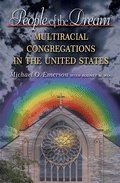
Dreaming of a "White" Christmas?: Race and the Emergent Church
Here at year’s end, I’m in a bit of a reflective mood.
It has been a year of changes and transitions and new experiences for me personally. I went to Africa (Morocco) for the first time in June, gave a boatload of conference papers about subjects I find really interesting and worthy of historical reflection, made some great friends both in blogosphere and in person, finished my Ph.D. coursework (in history), received attention for my writing, and my wife and I had our third child – a daughter! – in the wee hours of December 17. Both mother and daughter are home resting peacefully, and little Madeline's two big brothers love their sister!
Much of my recent research, reading, and writing on the wider world of twentieth/twenty-first century evangelicalism involves the Emerging/Emergent church. Not only does this topic interest me on an academic plane, but the movement resonates with me personally as well. Thus, here at year’s end, many of my reflections have to do with many things going on/in the Emerging/Emergent conversation and I comment both as an academic and as a practitioner.
One of the Emerging/Emergent streams of discussion in 2005, among many, many others, has been about race and ethnicity. Here I have in mind the series of posts by DJ Chaung on becoming a multiracial church, Scot McKnight's thoughts on (anti)racism and diversity, Anthony Smith's musings on the postmodern black church (and here and here), Jamie Arpin-Ricci's posts on diversity and gender, JazzTheologian's notes on spirituality and jazz, Rudy Carrasco's reflections on ethnicity, and the initiatives of Jay Voorhees and Aaron Flores. I'd also recommend reading Cracked Pots, Latina Liz, and Emergent Latino. And there are many others.
I applaud all of these contributions (have I left anyone out?) and have learned a great deal from all of these probing and cogent reflections.
I see real “promise” in the Emerging/Emergent movement for a willingness to think, act, pray, and live in spiritually holistic ways, for engagement with and adoption of aspects of all that encompasses Christian Traditions, and for an embrace of the global (Emerging) aspects of the movement; and for a real concern for and willingness to enact what James calls true religion. The Emergent-US statement of “Order,” as I read it, embraces all of these objectives.
Yet, there is more.
One of the glaring omissions in the conversation (though Anthony broaches the topic and I relate a personal story) is the reality that for all of the laudable discourse about inclusion and diversity, and for all of the crucial multicultural initiatives taking place, there must be a sustained, rigorous, honest, and open discussion about and interrogation of white privilege. Put another way, the road forward for the Emergent church and the diversity/multicultural conversation must begin with a discussion of white privilege.
Perhaps this is implicit in the words and thoughts of those who’ve reflected on race/ethnicity and the Emergent church, but I suggest that owning up to white privilege and discussing it slowly, thoroughly, and thoughtfully is one of the most important dimensions of this part of the Emerging/Emergent conversation. I write of an initiative that will take time, care, and much grace.
Further posts: what is white privilege and why does it matter for the Emergent church?
It has been a year of changes and transitions and new experiences for me personally. I went to Africa (Morocco) for the first time in June, gave a boatload of conference papers about subjects I find really interesting and worthy of historical reflection, made some great friends both in blogosphere and in person, finished my Ph.D. coursework (in history), received attention for my writing, and my wife and I had our third child – a daughter! – in the wee hours of December 17. Both mother and daughter are home resting peacefully, and little Madeline's two big brothers love their sister!
Much of my recent research, reading, and writing on the wider world of twentieth/twenty-first century evangelicalism involves the Emerging/Emergent church. Not only does this topic interest me on an academic plane, but the movement resonates with me personally as well. Thus, here at year’s end, many of my reflections have to do with many things going on/in the Emerging/Emergent conversation and I comment both as an academic and as a practitioner.
One of the Emerging/Emergent streams of discussion in 2005, among many, many others, has been about race and ethnicity. Here I have in mind the series of posts by DJ Chaung on becoming a multiracial church, Scot McKnight's thoughts on (anti)racism and diversity, Anthony Smith's musings on the postmodern black church (and here and here), Jamie Arpin-Ricci's posts on diversity and gender, JazzTheologian's notes on spirituality and jazz, Rudy Carrasco's reflections on ethnicity, and the initiatives of Jay Voorhees and Aaron Flores. I'd also recommend reading Cracked Pots, Latina Liz, and Emergent Latino. And there are many others.
I applaud all of these contributions (have I left anyone out?) and have learned a great deal from all of these probing and cogent reflections.
I see real “promise” in the Emerging/Emergent movement for a willingness to think, act, pray, and live in spiritually holistic ways, for engagement with and adoption of aspects of all that encompasses Christian Traditions, and for an embrace of the global (Emerging) aspects of the movement; and for a real concern for and willingness to enact what James calls true religion. The Emergent-US statement of “Order,” as I read it, embraces all of these objectives.
Yet, there is more.
One of the glaring omissions in the conversation (though Anthony broaches the topic and I relate a personal story) is the reality that for all of the laudable discourse about inclusion and diversity, and for all of the crucial multicultural initiatives taking place, there must be a sustained, rigorous, honest, and open discussion about and interrogation of white privilege. Put another way, the road forward for the Emergent church and the diversity/multicultural conversation must begin with a discussion of white privilege.
Perhaps this is implicit in the words and thoughts of those who’ve reflected on race/ethnicity and the Emergent church, but I suggest that owning up to white privilege and discussing it slowly, thoroughly, and thoughtfully is one of the most important dimensions of this part of the Emerging/Emergent conversation. I write of an initiative that will take time, care, and much grace.
Further posts: what is white privilege and why does it matter for the Emergent church?
Friday, December 09, 2005
Back to Africa: Darfur/Sudan
Here's an interesting article on Darfur that appeared originally in First Things.
Speaking of Darfur, a fellow graduate student colleague from Rice University and I are in the process of putting together a public information forum on Sudan and Darfur. It will take place the week of February 13, 2006 on the campus of Rice University. So far speakers include Jerry Fowler and Mark Bixler. I'll post more information as it becomes available.
Please try to make it if you're in the area.
Speaking of Darfur, a fellow graduate student colleague from Rice University and I are in the process of putting together a public information forum on Sudan and Darfur. It will take place the week of February 13, 2006 on the campus of Rice University. So far speakers include Jerry Fowler and Mark Bixler. I'll post more information as it becomes available.
Please try to make it if you're in the area.
Scot McKnight and BaldBlogger on the Emerging/Emergent Church
Over at Jesus Creed, Scot McKnight offers keen advice to frame discourse in Emerging/Emergent disscussions. He suggests a kind of scholarly precision when referring to "Emerging" or "Emergent" and really asks those who choose to publicly comment on these matters to do their homework and read up on the movement. The literature is expansive and growing, and tracking the conversation/movement in the blogosphere is a must.
I would also suggest that one consider attending a church/community that embraces the "label" Emergent/Emerging in order to enhance one's participation in the discussion and get a sense of how these communities enact the Christian faith. Aaron Flores's fine M.A. thesis on the Emerging church has a long list of these communities.
I would also suggest that one consider attending a church/community that embraces the "label" Emergent/Emerging in order to enhance one's participation in the discussion and get a sense of how these communities enact the Christian faith. Aaron Flores's fine M.A. thesis on the Emerging church has a long list of these communities.
Tuesday, December 06, 2005
BaldBlogging on the Emerging Church, Part 9 (Lent 2005)
As stated in previous posts, these observations come from my journey through Lent 2005 with the faithful of Ecclesia Houston. I should note that the church no longer meets in the physical church space I describe (West End Baptist Church), but in Taft Street Coffee House. I also want to publicly thank Pastor Chris Seay for permission to “observe” and write about Ecclesia.
Several things strike observers of Ecclesia. To the right of the three-door entrance to the sanctuary there is a large banner tied to a locked black iron gate that reads, “ECCLESIA.” This red banner contrasts nicely with the black iron, red brick, and white doors, yet I do not recall many churches with a banner draped around the entrance.
In the foyer of the church there is a small book table with an assortment of books – copies of The Tao of Enron as well as hardcover copies of The Message. I peruse the books for a few moments and then notice that to the left of the book table sits an icon of Christ Pantocrator, an icon displayed in most Eastern Orthodox churches. This striking icon – with the eyes of Christ fixing a piercing gaze – sits on top of a box draped with tan wool and surrounded by ten candles. Hanging on the wall (nearly above the icon) is an old painting of a decidedly Anglo Jesus. This painting has obviously been a fixture here for some time. Here, at the entrance of Ecclesia, is a meeting of the ancient and the modern, in essence an aesthetic tension between the ancient past and postmodern present, a tension this Emergent church is willing to feel, to embody, and to investigate. I proceed forward.
As I enter the sanctuary on this pre-Lenten Sunday evening, I notice the stage flanked by two large paintings – to my left is a large mural of a what appears to be an African-American boy with a white dove resting on his shoulder; he displays a look of quiet determination and his head, like many Byzantine icons I have seen, is encircled with a golden ring. The painting to my right is harder to make out; the image seems intentionally fuzzy – an Anglo man whose features are distorted but whose head rests in front of the sun. Perhaps, I think, this is some kind of metaphorical painting to demonstrate the way Light can bring healing. I then notice that five large stained glass portraits frame either side of the sanctuary; the portraits feature scenes from gospel stories. In the far right corner of the sanctuary there sits a wooden triptych, though I cannot see what scriptural moments are carved and whittled into its three parts. Sitting in a wooden pew, I take in the entire setting: a “traditional” church stage with candles burning, a short, whitish statue of Jesus with arms open facing the congregation, the stage framed by murals painted by local artists and stained glass that features gospel moments. Like the foyer, I notice a kind of aesthetic tension between ancient past and postmodern present. Developing a feel for the place, I then begin to observe the people who surround me.
By this time the service has started, and the band begins to play. The members of this band, known as the Robbie Seay band, are professionals with several CDs to their credit. They are polished yet worshipful; authentic without musical cults of personality. Songs like “Glorious” and “Hallelujah God is Near” beat from the drums, scream from the guitars, and float from the microphones. I cast my gaze across the congregation and try to notice the various ways in which individuals worship: as those in attendance follow the words displayed on a large screen behind the stage, some clap to the rhythm, others jump up and down as if at a concert, others have hands raised in what is an obvious moment of authentic worship, and another sits to write and reflect in a journal. The moment possesses something of a concert feel and the songs authentically sung are the hymns of a new generation.
The music then gives way to a few moments of tithe collection; plates are passed around the sanctuary and I follow several up and down the rows in front of me. Corporate prayers and confession follow the tithing. The corporate prayers and confession came from the pen (or keyboard) of one of Ecclesia’s members; there is no Apostles’ or Nicene Creed tonight. I listen intently as I hear, among other things, the congregation corporately asking God for strength, ability, and wisdom to serve and love the homeless of Houston and to visit with mercy those suffering brutal inhumanity in Darfur, Sudan. This corporate prayer is displayed on the screen behind the stage, with thematic pictures accompanying the stanzas of prayer. Again, the ancient past – the corporate “chant” of the prayer – mixes with the image- and text-saturated postmodern present as the congregation confesses sin and prays for strength to pursue holiness in strikingly intentional and thoughtfully relational ways. Prayer for local matters meets with supplication for global concerns. It is time for the sermon.
Tonight, the week before Lent begins, Christian author Donald Miller guest preaches and delivers a sermon on John 21 where several disciples dine with Christ on the beach. The theme of fish is everywhere present, Miller points out, and poses the question Christ asked of Peter – “Do you love me more than these?” – to those in attendance. Miller argues that Christ’s question is not about the fish which figure prominently in this passage, but about the things Christians “own” today: reputations, jobs, possessions, etc. The upshot of Miller’s message, he says, is about passion; are followers of Christ today passionate about service and serious about holiness, he asks, or is Christian living merely about meeting a behavioral code? Miller then suggests that Peter’s request for upside down crucifixion did not come about because Peter wanted to “do the right thing,” but because he was passionately “in love” with Christ. Miller ends with an admonition to be “revolutionaries” for Christ in the North American context.
I stay for the communion service. The mood is somber, as this is the last holy meal before the long fast through the Lenten season. As the music plays members and attendees make their way in two rows up to the front of the sanctuary for the Communion elements. I make my way to the front and encounter three individuals – one hold’s the bread, another holds a chalice with wine, and another a chalice with grape juice. I take a small piece of bread and a woman says, “The body of Christ, broken for you.” Like those before me, I dip my bread in the chalice of wine and a man says, “The blood of Christ, shed for you, brother.” Both before and during the communion service, the Robbie Seay band plays; the words of one song describe the moment: “I’m tasting forgiveness/Drinking the mercy/Feasting on redemption/tasting forgiveness.”
As is the custom for many of Ecclesia’s members and attendees, I travel after the service to Taft Street Coffee House, home to an art gallery and bookstore (and now Ecclesia’s worship space). The mood is festive and the fellowship, it appears, flourishes. The walls of the book store radiate with an assortment of colors, displays a large assortment of pictures and paintings and the furniture uniquely defines the communicative spaces of the large coffee-serving room; couches and tables invite those present to sit, read, and pursue conversation. The books rest on an assortment of bookshelves, divided into sections on art, poetry, theology, history, biography, philosophy, and spiritual formation, among other subjects. I even notice a display of books for a number of member-led reading groups (the books and topics rotate every several months). I settle into a comfortable couch with a cup of coffee and I have a number of conversations with people I recognize and also meet several other members of Ecclesia for the first time.
As I sit back and begin to reflect on my initial experience at Taft Street Coffee House, several things are emblematic of the Emerging/Emergent church: an intentional, (often) artistic, non-threatening place for face-to-face and electronic dialogue and conversation (the coffee house is wifi). The wide array of subjects and books serve as a metaphor for the ranges of conversation and diversity of topics welcomed in the Emerging/Emergent movement and the space to display art and host concerts and speakers demonstrates the movement’s commitment to field a variety of artistic mediums and expressions.
Next post: Ash Wednesday.
Several things strike observers of Ecclesia. To the right of the three-door entrance to the sanctuary there is a large banner tied to a locked black iron gate that reads, “ECCLESIA.” This red banner contrasts nicely with the black iron, red brick, and white doors, yet I do not recall many churches with a banner draped around the entrance.
In the foyer of the church there is a small book table with an assortment of books – copies of The Tao of Enron as well as hardcover copies of The Message. I peruse the books for a few moments and then notice that to the left of the book table sits an icon of Christ Pantocrator, an icon displayed in most Eastern Orthodox churches. This striking icon – with the eyes of Christ fixing a piercing gaze – sits on top of a box draped with tan wool and surrounded by ten candles. Hanging on the wall (nearly above the icon) is an old painting of a decidedly Anglo Jesus. This painting has obviously been a fixture here for some time. Here, at the entrance of Ecclesia, is a meeting of the ancient and the modern, in essence an aesthetic tension between the ancient past and postmodern present, a tension this Emergent church is willing to feel, to embody, and to investigate. I proceed forward.
As I enter the sanctuary on this pre-Lenten Sunday evening, I notice the stage flanked by two large paintings – to my left is a large mural of a what appears to be an African-American boy with a white dove resting on his shoulder; he displays a look of quiet determination and his head, like many Byzantine icons I have seen, is encircled with a golden ring. The painting to my right is harder to make out; the image seems intentionally fuzzy – an Anglo man whose features are distorted but whose head rests in front of the sun. Perhaps, I think, this is some kind of metaphorical painting to demonstrate the way Light can bring healing. I then notice that five large stained glass portraits frame either side of the sanctuary; the portraits feature scenes from gospel stories. In the far right corner of the sanctuary there sits a wooden triptych, though I cannot see what scriptural moments are carved and whittled into its three parts. Sitting in a wooden pew, I take in the entire setting: a “traditional” church stage with candles burning, a short, whitish statue of Jesus with arms open facing the congregation, the stage framed by murals painted by local artists and stained glass that features gospel moments. Like the foyer, I notice a kind of aesthetic tension between ancient past and postmodern present. Developing a feel for the place, I then begin to observe the people who surround me.
By this time the service has started, and the band begins to play. The members of this band, known as the Robbie Seay band, are professionals with several CDs to their credit. They are polished yet worshipful; authentic without musical cults of personality. Songs like “Glorious” and “Hallelujah God is Near” beat from the drums, scream from the guitars, and float from the microphones. I cast my gaze across the congregation and try to notice the various ways in which individuals worship: as those in attendance follow the words displayed on a large screen behind the stage, some clap to the rhythm, others jump up and down as if at a concert, others have hands raised in what is an obvious moment of authentic worship, and another sits to write and reflect in a journal. The moment possesses something of a concert feel and the songs authentically sung are the hymns of a new generation.
The music then gives way to a few moments of tithe collection; plates are passed around the sanctuary and I follow several up and down the rows in front of me. Corporate prayers and confession follow the tithing. The corporate prayers and confession came from the pen (or keyboard) of one of Ecclesia’s members; there is no Apostles’ or Nicene Creed tonight. I listen intently as I hear, among other things, the congregation corporately asking God for strength, ability, and wisdom to serve and love the homeless of Houston and to visit with mercy those suffering brutal inhumanity in Darfur, Sudan. This corporate prayer is displayed on the screen behind the stage, with thematic pictures accompanying the stanzas of prayer. Again, the ancient past – the corporate “chant” of the prayer – mixes with the image- and text-saturated postmodern present as the congregation confesses sin and prays for strength to pursue holiness in strikingly intentional and thoughtfully relational ways. Prayer for local matters meets with supplication for global concerns. It is time for the sermon.
Tonight, the week before Lent begins, Christian author Donald Miller guest preaches and delivers a sermon on John 21 where several disciples dine with Christ on the beach. The theme of fish is everywhere present, Miller points out, and poses the question Christ asked of Peter – “Do you love me more than these?” – to those in attendance. Miller argues that Christ’s question is not about the fish which figure prominently in this passage, but about the things Christians “own” today: reputations, jobs, possessions, etc. The upshot of Miller’s message, he says, is about passion; are followers of Christ today passionate about service and serious about holiness, he asks, or is Christian living merely about meeting a behavioral code? Miller then suggests that Peter’s request for upside down crucifixion did not come about because Peter wanted to “do the right thing,” but because he was passionately “in love” with Christ. Miller ends with an admonition to be “revolutionaries” for Christ in the North American context.
I stay for the communion service. The mood is somber, as this is the last holy meal before the long fast through the Lenten season. As the music plays members and attendees make their way in two rows up to the front of the sanctuary for the Communion elements. I make my way to the front and encounter three individuals – one hold’s the bread, another holds a chalice with wine, and another a chalice with grape juice. I take a small piece of bread and a woman says, “The body of Christ, broken for you.” Like those before me, I dip my bread in the chalice of wine and a man says, “The blood of Christ, shed for you, brother.” Both before and during the communion service, the Robbie Seay band plays; the words of one song describe the moment: “I’m tasting forgiveness/Drinking the mercy/Feasting on redemption/tasting forgiveness.”
As is the custom for many of Ecclesia’s members and attendees, I travel after the service to Taft Street Coffee House, home to an art gallery and bookstore (and now Ecclesia’s worship space). The mood is festive and the fellowship, it appears, flourishes. The walls of the book store radiate with an assortment of colors, displays a large assortment of pictures and paintings and the furniture uniquely defines the communicative spaces of the large coffee-serving room; couches and tables invite those present to sit, read, and pursue conversation. The books rest on an assortment of bookshelves, divided into sections on art, poetry, theology, history, biography, philosophy, and spiritual formation, among other subjects. I even notice a display of books for a number of member-led reading groups (the books and topics rotate every several months). I settle into a comfortable couch with a cup of coffee and I have a number of conversations with people I recognize and also meet several other members of Ecclesia for the first time.
As I sit back and begin to reflect on my initial experience at Taft Street Coffee House, several things are emblematic of the Emerging/Emergent church: an intentional, (often) artistic, non-threatening place for face-to-face and electronic dialogue and conversation (the coffee house is wifi). The wide array of subjects and books serve as a metaphor for the ranges of conversation and diversity of topics welcomed in the Emerging/Emergent movement and the space to display art and host concerts and speakers demonstrates the movement’s commitment to field a variety of artistic mediums and expressions.
Next post: Ash Wednesday.
Monday, November 28, 2005
Feminist and Christian (and Emergent/Emerging)
My good friend and graduate-student-in-history colleague Lauran, who is also into musing, recently began a series on "Why I'm a Feminist." She's also done some important writing on women and the Emergent/Emerging Church/Movement.
You should visit her blog. Often.
You should visit her blog. Often.
Saturday, November 26, 2005
BaldBlogging on the Emerging Church, Part 8
While previous posts address history, artistic expression, and worship, today’s post examines Emerging/Emergent cultural engagement. I briefly addressed “missionality” in a previous post, but will reframe the subject with today’s thoughts by offering specific, contextual examples of what it means to be missional.
Those in Emerging/Emergent communities often describe cultural engagement, what some call evangelism, as a “missional” activity. In fact, in the literature of the Emergent church one is less likely to come across references to evangelistic strategies or schemes; rather, one more often reads about missional trajectories of cultural interaction, and carefully defined statements about living within postmodern culture.
Emergent leader Spencer Burke, in Making Sense of the Church (2003), explains that “the warrior metaphor has permeated the Christian subculture, particularly our approach to evangelism.”1 According to Burke, in a culture given to obsession with violence, the warrior metaphor often defines the way evangelical Christians define relationships with those outside of the Christian fold. Burke lists organizations like Campus Crusade for Christ, recalls singing military oriented songs about evangelism as a youth, and participating in Bible “sword drills” in Sunday school. There are, no doubt, images of war in the Bible, Burke avers, but offers the gardener metaphor as an alternative way to imagine evangelism. Burke writes: "While warriors press on no matter what the elements, gardeners step back on occasion. They know that working the soil incessantly leads to burnout. They understand the importance of rest – of allowing a field to lie fallow for a year in order to regenerate itself. At the same time, however, they’re also keenly aware of the mystery of spiritual growth. Spiritual gardening is not an exact science. While gardeners faithfully do their part, they experience peace knowing that God is ultimately responsible for the crop."2 Here Burke replaces an evangelistic concept that many find offensive and ineffective (though images of war and spiritual warfare dot the Bible) with another picture from the Bible that allows discussion of a kind of organic evangelism.
Another striking example of missional relations with culture comes from Christian writer Donald Miller. In Blue Like Jazz (2003), Miller relates a story from college where he and several friends (all Christians) constructed a confessional booth in a high-traffic area of campus many students milled about after wild college parties. The group affixed a sign to the front of the structure that read “Confess your sins.” Miller then recalls what a friend said about the confessional: "We are not actually going to accept confessions…[w]e are going to confess to them [the party-goers]. We are going to confess that, as followers of Jesus, we have not been very loving; we have been bitter, and for that we are sorry. We will apologize for the Crusades, we will apologize for televangelists, we will apologize for neglecting the poor and the lonely, we will ask them to forgive us, and we will tell them that in our selfishness, we have misrepresented Jesus on this campus. We will tell people who come into the booth that Jesus loves them."3 Miller’s story captures the ways in which Emerging/Emergent engagement with culture creates constructive spaces for dialogue and conversation and invites healing and wholeness in decidedly non-confrontational ways.
Emerging pastor Steve Taylor offers the vision of “spiritual tourism” to explain the missional possibilities of postmodern Christianity. In The Out of Bounds Church?: Learning to Create a Community of Faith in a Culture of Change (2004), Taylor explains that some tourists are recreational in nature, those whose travels bring rest and respite, others experiential, always seeking a thrill, while others are more existentially inclined and internalize traveling experiences. “Christian formation,” Taylor writes, “involves the move from experiential and experimental seeker to existential relocation to a new place of being and understanding. It is in essence a call to tour, to journey spiritually with God. It is a move away from recreation and diversion toward an inward relocation of heart and mind.” While Taylor admits that such a description sounds like consumer spirituality, he adamantly states that within the context of creating community and attempting to bridge conversations with culture, “the church is cooperating with the way our contemporary culture accesses information and experience and reflects on them. The church allows tourists to navigate their way through the rich resources of the Christian tradition….[t]he church is a participator with the unseen wind of the Spirit of God.”4
Another Emergent writer, Mark Driscoll, suggests that the Apostle Paul modeled postmodern ways of engaging postmodern culture. Commenting on the account of Paul on Mars Hill from Acts 17, Driscoll contrasts Paul’s preaching methodology at the Jewish synagogues with his disputation with the philosophers of Athens. Paul’s listeners at synagogues were familiar with the Old Testament, and thus his sermons began with a common point of reference, categories that both preacher and audience understood. In Athens, on the other hand, Driscoll points out, Paul first referenced Greek culture to attain common ground with his listeners before moving on to “biblical” categories of thought and reason. Paul noted the spiritual posture of the Athenians, for example, quoted a number of Greek poets, and later took these concepts and brought them into a Christian framework. “In our day,” Driscoll remarks, “this would be akin to unearthing partial truths about God from a culture’s film, music, comedy, sports, literature, theater, philosophy, economics, medicine, or politics and working from those truths to the truth of Jesus as the ultimate answer to all human questions and cultural problems.”5
Previous posts attempt to locate the Emerging/Emerging church through a discussion of its relation to postmodernism, explores its understanding of Christian history, examines the ways in which Emerging/Emergent thinkers and leaders formulate preaching, frame worship services, pursue spiritual formation, and conduct cultural engagement. While the foregoing captures major trends of the movement and outlines some of its important contours, a clearer understanding can only come from participation in the life of an Emerging/Emergent community. I spent Lent 2005 with an Emergent community in Houston, Ecclesia, and forthcoming posts will narrate my experiences there.
Endnotes
1Spencer Burke, Making Sense of the Church, 144.
2Ibid, 145.
3Donald Miller, Blue Like Jazz, 117-119.
4 Steve Taylor, The Out of Bounds Church?, 81-97, quotes from 83-84, 87-88.
5 Mark Driscoll, The Radical Reformission: Reaching Out Without Selling Out, 118-122, quote from 121.
Those in Emerging/Emergent communities often describe cultural engagement, what some call evangelism, as a “missional” activity. In fact, in the literature of the Emergent church one is less likely to come across references to evangelistic strategies or schemes; rather, one more often reads about missional trajectories of cultural interaction, and carefully defined statements about living within postmodern culture.
Emergent leader Spencer Burke, in Making Sense of the Church (2003), explains that “the warrior metaphor has permeated the Christian subculture, particularly our approach to evangelism.”1 According to Burke, in a culture given to obsession with violence, the warrior metaphor often defines the way evangelical Christians define relationships with those outside of the Christian fold. Burke lists organizations like Campus Crusade for Christ, recalls singing military oriented songs about evangelism as a youth, and participating in Bible “sword drills” in Sunday school. There are, no doubt, images of war in the Bible, Burke avers, but offers the gardener metaphor as an alternative way to imagine evangelism. Burke writes: "While warriors press on no matter what the elements, gardeners step back on occasion. They know that working the soil incessantly leads to burnout. They understand the importance of rest – of allowing a field to lie fallow for a year in order to regenerate itself. At the same time, however, they’re also keenly aware of the mystery of spiritual growth. Spiritual gardening is not an exact science. While gardeners faithfully do their part, they experience peace knowing that God is ultimately responsible for the crop."2 Here Burke replaces an evangelistic concept that many find offensive and ineffective (though images of war and spiritual warfare dot the Bible) with another picture from the Bible that allows discussion of a kind of organic evangelism.
Another striking example of missional relations with culture comes from Christian writer Donald Miller. In Blue Like Jazz (2003), Miller relates a story from college where he and several friends (all Christians) constructed a confessional booth in a high-traffic area of campus many students milled about after wild college parties. The group affixed a sign to the front of the structure that read “Confess your sins.” Miller then recalls what a friend said about the confessional: "We are not actually going to accept confessions…[w]e are going to confess to them [the party-goers]. We are going to confess that, as followers of Jesus, we have not been very loving; we have been bitter, and for that we are sorry. We will apologize for the Crusades, we will apologize for televangelists, we will apologize for neglecting the poor and the lonely, we will ask them to forgive us, and we will tell them that in our selfishness, we have misrepresented Jesus on this campus. We will tell people who come into the booth that Jesus loves them."3 Miller’s story captures the ways in which Emerging/Emergent engagement with culture creates constructive spaces for dialogue and conversation and invites healing and wholeness in decidedly non-confrontational ways.
Emerging pastor Steve Taylor offers the vision of “spiritual tourism” to explain the missional possibilities of postmodern Christianity. In The Out of Bounds Church?: Learning to Create a Community of Faith in a Culture of Change (2004), Taylor explains that some tourists are recreational in nature, those whose travels bring rest and respite, others experiential, always seeking a thrill, while others are more existentially inclined and internalize traveling experiences. “Christian formation,” Taylor writes, “involves the move from experiential and experimental seeker to existential relocation to a new place of being and understanding. It is in essence a call to tour, to journey spiritually with God. It is a move away from recreation and diversion toward an inward relocation of heart and mind.” While Taylor admits that such a description sounds like consumer spirituality, he adamantly states that within the context of creating community and attempting to bridge conversations with culture, “the church is cooperating with the way our contemporary culture accesses information and experience and reflects on them. The church allows tourists to navigate their way through the rich resources of the Christian tradition….[t]he church is a participator with the unseen wind of the Spirit of God.”4
Another Emergent writer, Mark Driscoll, suggests that the Apostle Paul modeled postmodern ways of engaging postmodern culture. Commenting on the account of Paul on Mars Hill from Acts 17, Driscoll contrasts Paul’s preaching methodology at the Jewish synagogues with his disputation with the philosophers of Athens. Paul’s listeners at synagogues were familiar with the Old Testament, and thus his sermons began with a common point of reference, categories that both preacher and audience understood. In Athens, on the other hand, Driscoll points out, Paul first referenced Greek culture to attain common ground with his listeners before moving on to “biblical” categories of thought and reason. Paul noted the spiritual posture of the Athenians, for example, quoted a number of Greek poets, and later took these concepts and brought them into a Christian framework. “In our day,” Driscoll remarks, “this would be akin to unearthing partial truths about God from a culture’s film, music, comedy, sports, literature, theater, philosophy, economics, medicine, or politics and working from those truths to the truth of Jesus as the ultimate answer to all human questions and cultural problems.”5
Previous posts attempt to locate the Emerging/Emerging church through a discussion of its relation to postmodernism, explores its understanding of Christian history, examines the ways in which Emerging/Emergent thinkers and leaders formulate preaching, frame worship services, pursue spiritual formation, and conduct cultural engagement. While the foregoing captures major trends of the movement and outlines some of its important contours, a clearer understanding can only come from participation in the life of an Emerging/Emergent community. I spent Lent 2005 with an Emergent community in Houston, Ecclesia, and forthcoming posts will narrate my experiences there.
Endnotes
1Spencer Burke, Making Sense of the Church, 144.
2Ibid, 145.
3Donald Miller, Blue Like Jazz, 117-119.
4 Steve Taylor, The Out of Bounds Church?, 81-97, quotes from 83-84, 87-88.
5 Mark Driscoll, The Radical Reformission: Reaching Out Without Selling Out, 118-122, quote from 121.
Friday, November 25, 2005
Electronic Panoply of the Emerging/Emergent Church
Andrew Jones has a fine post on a number of articles, blogs, and discussions related to the Emerging/Emergent church. Whether an insider, outsider, friendly observer, or uninformed critic, these links are well worth a look.
Tuesday, November 22, 2005
BaldBlogging on the Emerging Church, Part 7
Today’s theme: Preaching
Pastors in the Emergent/Emerging church respect and believe in the historical authenticity of the Bible and therefore aim to faithfully interpret and creatively apply biblical texts. In Emergent contexts pastors often engage in a theological and practical conversation about a biblical text or theme, and the application of the text often comes when members of a community offer their own experiences as they relate to the text. The sermon thus appears more like a discussion as opposed to a theological lecture, and on occasion takes the form of a parable, a contemporary story with biblical resonance, meaning, and application.
Emerging leader Dan Kimball (The Emerging Church [2003]) explains how preaching in an Emerging setting remains faithful to the Bible’s message while interpreting and applying that message in contemporary contexts. Kimball urges pastors to imagine themselves as storytellers, as heralds of God sent to proclaim a message of grace and forgiveness. Such storytelling speaks a religious language that both insiders and outsiders can understand. Communication is critical in Kimball’s opinion, and as such ministers should not neglect the public proclamation, in various forms, of the Bible. “The emerging church needs to elevate public reading, preaching, and teaching,” Kimball writes, “[i]n a culture devoid of truth and lacking understanding of the scriptural story, we need to proclaim, herald, and preach all the more. But the way we do this needs to change because the audience has changed.”1
According to Kimball, much like Paul’s address to the philosophers of Athens as told in Acts 17, tending to the needs of today’s listeners allows for a variety of approaches to presenting the stories of Christianity. Even with the freedom to experiment with delivery styles (discussed below), Kimball contends that preaching to today’s listeners demands that Christ remain the central focus of the message, that the Trinitarian equation animate all discussion, that the physicality of being human frame spiritual pondering (especially issues surrounding sexuality), that the scriptures remain in an authoritative position, that hell and perdition frequent conversations, and that ministers acknowledge that the Christian spiritual journey is one of highs and lows, a life of “messy spirituality” and constant striving for obedience and holiness.2
With respect to modes of communicating the message, Kimball believes that ultimately the Holy Spirit brings conviction and guides consciences to faith; it is the pastor’s role to consider “how [to] present truth to the people we hope to see transformed.” This consideration leads Kimball to posit that “experience” far outweighs the “facts” of a presentation. “We need to approach Scripture in a holistic way,” Kimball argues, “thinking through how the sermon fits within the worship experience. We need to blend our propositions of truth with experiences of truth.” On this point Kimball suggests the incorporation of more visual elements into worship experiences, from images of stained glass, to icons, to contemporary art infused with biblical texts. Kimball believes this better engages today’s listeners, highlights the importance of the biblical narrative, and encourages communal participation in services with corporate reading or private meditation, and attempts to remove the pastoral cult of personality that inhabits many Protestant churches today. Kimball also asserts that this approach to worship creates an environment that embraces dialogue and allows a genuine “struggle” with scriptures, much like the Hebrew Midrash. “To a modern mindset this might sound dangerous,” Kimball admits, “but I believe this is healthy and sharpens our thinking. It also admits that we may not have all the answers about God neatly packaged.”3
While Kimball describes the role of a preacher as storyteller, Emerging leader Spencer Burke, in Making Sense of the Church: Eavesdropping on Emerging Conversations about God, Community, and Culture (2003), prefers to imagine preachers as facilitators because facilitators do not merely “impart information, [they] create opportunities for learning.” Burke suggests that most sermons are “thinly disguised university lecture[s],” and that many modern Christians idolize knowledge above praxis. This approach, in Burke’s estimation, often obscures a community’s focus “on the Word become flesh,” a kind of focus that creates space for more displays of Christian symbolism in the form of things like icons. Burke’s approach, from preacher as facilitator to a more thoroughgoing use of symbols and signs above all sets Christian worship in an egalitarian and in his view a more biblical mode. “For years,” Burkes writes, “we have elevated teaching to the exclusion of other gifts. Paul described the church in terms of a body. Whether we realize it or not, we’re walking around with a body that’s grossly out of proportion to our head. Our obsession with teaching has made us a caricature of what God intended.”4 Both Burke and Kimball agree that delivery styles might undergo experiment or improvisation, and invite those who communicate messages to reformulate pastoral identity.
If Kimball and Burke offer a kind of theoretical framework for preaching, teaching, and application in an Emerging setting, Doug Pagitt describes what this looks like in an Emerging church in Minneapolis, Minnesota. In Reimagining Spiritual Formation: A Week in the Life of an Experimental Church, Pagitt discusses the sacred spaces in which the Solomon’s Porch community worships and the ways these spaces frame discussion and dialogue. Intentionally eschewing the festive feel of megachurches, the worship experience at Solomon’s Porch aims to be more “interactive and participatory.” This means that stages and other architectural displays of power give way to meeting “in the round” where couches enclose and encapsulate the community, and all in attendance are invited to speak and share at various times during the service. This structure also translates into a worship experience where the music comes from the lips and instruments of “local” musicians, where Psalm readings (only by female members of the community) become weekly expressions of “the poetry of [the Christian] faith,” where communion exists as the weekly meal of spiritual sustenance, where communal and individual prayer becomes a collective utterance of community, and where the sermon becomes a “story” framed by a Biblical passage and interpreted to fit with a contemporary settings.5
This series continues with another look at the Emerging/Emergent churches and missionality and with forthcoming posts about my travel through Lent 2005 with the faithful at Ecclesia Houston.
Endnotes
1 Dan Kimball, The Emerging Church: Vintage Christianity for New Generations (Grand Rapids: Zondervan, 2003), 171-173.
2 Ibid., 174-183.
3 Ibid., 185-194, quoting 187, 188, 193.
4 Spencer Burke, Making Sense of Church: Eavesdropping on Emerging Conversations about God, Community, and Culture (Grand Rapids: Zondervan, 2003), 51-66, quoting 52-54, 65.
5 Doug Pagitt, Reimagining Spiritual Formation: A Week in the Life of an Experimental Church (Grand Rapids: Zondervan, 2004), 49-64, 113-124.
Pastors in the Emergent/Emerging church respect and believe in the historical authenticity of the Bible and therefore aim to faithfully interpret and creatively apply biblical texts. In Emergent contexts pastors often engage in a theological and practical conversation about a biblical text or theme, and the application of the text often comes when members of a community offer their own experiences as they relate to the text. The sermon thus appears more like a discussion as opposed to a theological lecture, and on occasion takes the form of a parable, a contemporary story with biblical resonance, meaning, and application.
Emerging leader Dan Kimball (The Emerging Church [2003]) explains how preaching in an Emerging setting remains faithful to the Bible’s message while interpreting and applying that message in contemporary contexts. Kimball urges pastors to imagine themselves as storytellers, as heralds of God sent to proclaim a message of grace and forgiveness. Such storytelling speaks a religious language that both insiders and outsiders can understand. Communication is critical in Kimball’s opinion, and as such ministers should not neglect the public proclamation, in various forms, of the Bible. “The emerging church needs to elevate public reading, preaching, and teaching,” Kimball writes, “[i]n a culture devoid of truth and lacking understanding of the scriptural story, we need to proclaim, herald, and preach all the more. But the way we do this needs to change because the audience has changed.”1
According to Kimball, much like Paul’s address to the philosophers of Athens as told in Acts 17, tending to the needs of today’s listeners allows for a variety of approaches to presenting the stories of Christianity. Even with the freedom to experiment with delivery styles (discussed below), Kimball contends that preaching to today’s listeners demands that Christ remain the central focus of the message, that the Trinitarian equation animate all discussion, that the physicality of being human frame spiritual pondering (especially issues surrounding sexuality), that the scriptures remain in an authoritative position, that hell and perdition frequent conversations, and that ministers acknowledge that the Christian spiritual journey is one of highs and lows, a life of “messy spirituality” and constant striving for obedience and holiness.2
With respect to modes of communicating the message, Kimball believes that ultimately the Holy Spirit brings conviction and guides consciences to faith; it is the pastor’s role to consider “how [to] present truth to the people we hope to see transformed.” This consideration leads Kimball to posit that “experience” far outweighs the “facts” of a presentation. “We need to approach Scripture in a holistic way,” Kimball argues, “thinking through how the sermon fits within the worship experience. We need to blend our propositions of truth with experiences of truth.” On this point Kimball suggests the incorporation of more visual elements into worship experiences, from images of stained glass, to icons, to contemporary art infused with biblical texts. Kimball believes this better engages today’s listeners, highlights the importance of the biblical narrative, and encourages communal participation in services with corporate reading or private meditation, and attempts to remove the pastoral cult of personality that inhabits many Protestant churches today. Kimball also asserts that this approach to worship creates an environment that embraces dialogue and allows a genuine “struggle” with scriptures, much like the Hebrew Midrash. “To a modern mindset this might sound dangerous,” Kimball admits, “but I believe this is healthy and sharpens our thinking. It also admits that we may not have all the answers about God neatly packaged.”3
While Kimball describes the role of a preacher as storyteller, Emerging leader Spencer Burke, in Making Sense of the Church: Eavesdropping on Emerging Conversations about God, Community, and Culture (2003), prefers to imagine preachers as facilitators because facilitators do not merely “impart information, [they] create opportunities for learning.” Burke suggests that most sermons are “thinly disguised university lecture[s],” and that many modern Christians idolize knowledge above praxis. This approach, in Burke’s estimation, often obscures a community’s focus “on the Word become flesh,” a kind of focus that creates space for more displays of Christian symbolism in the form of things like icons. Burke’s approach, from preacher as facilitator to a more thoroughgoing use of symbols and signs above all sets Christian worship in an egalitarian and in his view a more biblical mode. “For years,” Burkes writes, “we have elevated teaching to the exclusion of other gifts. Paul described the church in terms of a body. Whether we realize it or not, we’re walking around with a body that’s grossly out of proportion to our head. Our obsession with teaching has made us a caricature of what God intended.”4 Both Burke and Kimball agree that delivery styles might undergo experiment or improvisation, and invite those who communicate messages to reformulate pastoral identity.
If Kimball and Burke offer a kind of theoretical framework for preaching, teaching, and application in an Emerging setting, Doug Pagitt describes what this looks like in an Emerging church in Minneapolis, Minnesota. In Reimagining Spiritual Formation: A Week in the Life of an Experimental Church, Pagitt discusses the sacred spaces in which the Solomon’s Porch community worships and the ways these spaces frame discussion and dialogue. Intentionally eschewing the festive feel of megachurches, the worship experience at Solomon’s Porch aims to be more “interactive and participatory.” This means that stages and other architectural displays of power give way to meeting “in the round” where couches enclose and encapsulate the community, and all in attendance are invited to speak and share at various times during the service. This structure also translates into a worship experience where the music comes from the lips and instruments of “local” musicians, where Psalm readings (only by female members of the community) become weekly expressions of “the poetry of [the Christian] faith,” where communion exists as the weekly meal of spiritual sustenance, where communal and individual prayer becomes a collective utterance of community, and where the sermon becomes a “story” framed by a Biblical passage and interpreted to fit with a contemporary settings.5
This series continues with another look at the Emerging/Emergent churches and missionality and with forthcoming posts about my travel through Lent 2005 with the faithful at Ecclesia Houston.
Endnotes
1 Dan Kimball, The Emerging Church: Vintage Christianity for New Generations (Grand Rapids: Zondervan, 2003), 171-173.
2 Ibid., 174-183.
3 Ibid., 185-194, quoting 187, 188, 193.
4 Spencer Burke, Making Sense of Church: Eavesdropping on Emerging Conversations about God, Community, and Culture (Grand Rapids: Zondervan, 2003), 51-66, quoting 52-54, 65.
5 Doug Pagitt, Reimagining Spiritual Formation: A Week in the Life of an Experimental Church (Grand Rapids: Zondervan, 2004), 49-64, 113-124.
Sunday, November 06, 2005
Emerging Church, circa 1970s
In recent months both Andrew Jones and Dan Kimball have noted books from the 1970s with "emerging" titles.
I'd like to add another title to the discussion: Sergio Torres and Virginia Fabella, editors, The Emergent Gospel: Theology from the Underside of History (Orbis, 1978).
This is a collection of essays from the 1976 Ecumenical Dialogue of Third World Theologians held at Dar es Salaam (Tanzania). Interestingly, the voices here present interrogate the hegemony of Western theological trends (see below); these words remain true today.
One hopes, as I did in a recent paper, that Emergent (US) voices continue to adopt global postures.
From the Final Statement of the Ecumenical Dialogue of Third World Theologians (1976):
"The theologies from Europe and North America are dominant today in our churches and represent one form of cultural domination. They must be understood to have arisen out of situations related to those countires, and therefore must not be uncritically adopted without our raising the question of their relavance in the context of our countries....We reject as irrelevant an academic type of theology that is divorced from action. We are prepared for a radical break in epistemology which makes commitment the first act of theology and engages critical reflection on praxis of the reality of the Third World" (from the Introduction, p. x).
Any thoughts?
I'd like to add another title to the discussion: Sergio Torres and Virginia Fabella, editors, The Emergent Gospel: Theology from the Underside of History (Orbis, 1978).
This is a collection of essays from the 1976 Ecumenical Dialogue of Third World Theologians held at Dar es Salaam (Tanzania). Interestingly, the voices here present interrogate the hegemony of Western theological trends (see below); these words remain true today.
One hopes, as I did in a recent paper, that Emergent (US) voices continue to adopt global postures.
From the Final Statement of the Ecumenical Dialogue of Third World Theologians (1976):
"The theologies from Europe and North America are dominant today in our churches and represent one form of cultural domination. They must be understood to have arisen out of situations related to those countires, and therefore must not be uncritically adopted without our raising the question of their relavance in the context of our countries....We reject as irrelevant an academic type of theology that is divorced from action. We are prepared for a radical break in epistemology which makes commitment the first act of theology and engages critical reflection on praxis of the reality of the Third World" (from the Introduction, p. x).
Any thoughts?
Friends in the Blogosphere
Glad to see my friend Keelan Downton in this branch of the blogosphere. I look foward to his reflections; he has some important things to say with respect to ecumenical concerns as well as interfaith dialogue.
BaldBlogging on the Emerging Church, Part 6
As previous posts indicate, notable numbers of Emerging/Emergent faithful engage postmodernism and work to translate this intellectual posture into practical settings. For many in the movement a number of trajectories (i.e., worship and artistic expression) define cultural engagement at the practical level and transmit this engagement in postmodern ways. Hence the topic of today’s post: worship.
Postmodern worship, in the words of Emerging leader Dan Kimball (The Emerging Church [2003]), while making possible the employment of creativity and improvisation must stay keen to “attribute worth to God [and] to kiss toward him in reverence and lay prostrate.” This attribution, Kimball contends, examines how scriptures describe worship and also takes a serious glance at worship in the early church. Prayer, sacraments, teaching, and community characterized the early church, and because of Christ’s Incarnation, Kimball maintains, Christians today can and should create “multisensory” worship gatherings – meetings of faith and devotion that involve all of the senses. In this view faithful devotion is not merely intellectual assent to a catalogue of doctrines or propositions; faithful devotion involves careful reflection on the aesthetics of worship, the sacred spaces and experiences to which Emerging leaders attend. Emerging gatherings, therefore, aim at holistic worship – worship that involves visual stimuli like icons (but also for religious instruction) or computer technology, physical motion like clapping or kneeling, smelling incense, “tasting” the Eucharistic meal, and “hearing” the voice of God through dialogical conversation. Ideally, holistic worship also includes the participation of all in attendance – both men and women, both old and young. Not only does Kimball advocate the creation of an environment where the postmodern generation might encounter God in various ways, he also advocates the use of silence as a way to connect to others and as a way to teach patience and devotion.1
Another aspect of worship that receives significant attention among Emergent/Emerging pastors, thinkers, and practitioners is the use of art in worship, or simply the use of art as an expression of faith. Both the Roman Catholic and Eastern Orthodox traditions have historically used artistic expression in liturgies and devotions, from icons of saints to statues of the Virgin Mary, for example. Yet many in the Emerging/Emergent movement, who are conscious of what we might call the art history of Christianity, maintain spaces for more improvisational and individual expressions of faith. “Visualcy,” Andy Crouch writes, captures the essence of today’s visual culture and suggests that evangelicals must acquire a new kind of literacy for the postmodern age. Crouch is hopeful that a kind of artistic discourse of images will equip evangelicals to thoughtfully engage today’s world: “visual technologies are restoring human beings to our God-given role as communal cultural communicators.”2
Similarly, in an essay titled “Digital Media as Cultural Metaphor,” communications theorist Robert S. Fortner calls for deeper reflection on the “metaphysics of this digital age,” a time during which the growth of digital culture injects a kind of communicative democratization into electronic discourse. For Christians, according to Fortner, this new age demands careful analysis and appropriation of digital technology to the life of faith. “[T]his is the new culture now under construction,” Fortner concludes, “one that – through its metaphorical definition of reality – will reconfigure the symbolic world of humankind and the methodology for recognizing truth. Yet it is this new symbolic world that Scripture and those who believe it must address if we are to make the Word of God relevant to mankind. It is a new Babel.”3 Many in the Emergent/Emerging church recognize this reality, and seek to apply it.
In “Musings on Art and the Relationship to Worship in the 21st Century,” musician and consultant Cathy Townley eschews practical suggestions for how to feature art in worship services in order to display why art is godly and how artists can display godliness. According to Townley, art can uniquely convey the “truth,” which is not always beautiful, and in the end produce a kind of spiritual and ontological transformation. “Art brings the inside outside,” Townley writes, “[and] [a]rt makes you internalize what you perceive. Art begins conversation, and dialogue….Art is the language of the soul.” Townley suggests that visual discourse includes all of humanity in the conversation of God’s perpetual creation(s), and as such “[t]he artist in a human being is sacred space.” In this sense, Townley observes, the human quest for wholeness, healing, and community often comes through artistic mediums, and it is in this dimension of life that true spiritual healing might come. “In a sense,” Townley concludes, “the artist is not only one who has a talent, but is also a metaphor for one who endures the pain of life.”4 Thus, for Townely, the Emerging environment creates the possibility to observe humanity fleshed out, to witness visible healing displayed in the context of a worshiping community.
Moving from theoretical to practical displays of faith, what the authors call “praxis,” Jonny Baker, Doug Gay, and Jenny Brown offer a collection of options in Alternative Worship: Resources From and For the Emerging Church (2004). To enhance and transform worship the authors suggest that Emerging churches might shape services by the inclusion of historical liturgies, the application of communications theories, and displays of artistic expression. Furthermore, devotional and sacramental living might result from these transformative worship settings, whether musically enhanced or artistically ensconced. The authors also suggest that “alternative” worship settings sometimes encourage political engagement framed by theologies of liberation, whether political or gender-based. Even though the authors rightly define their worship as “alternative,” they frame their liturgically innovative suggestions around the “traditional” church calendar so that the church years open with Advent and ends with Pentecost. To demonstrate what the authors mean by “alternative worship,” I will describe enhanced liturgical suggestions from the season of Pentecost.
The authors open the chapter on Pentecost by framing contemporary celebrations of this liturgical season with the recent global explosion of Pentecostalism itself. Large numbers of global Christians practice more pentecostal or charismatic expressions of faith, the authors point out, so it follows that the Emerging church should reflect these trends. The authors also note that much of contemporary theological reflection possesses a renewed focus on pneumatology and its connection to individual spiritual and communal expressions of Spirit-led Christian unity that cross cultural and ethnic boundaries. To accomplish this, the authors offer a number of corporate reader-response prayers and confessions, and also suggest practical ways to display Pentecost. For example, a corporate prayer titled “Opening Doors” reads: “Eternal God, fling open the doors of our hearts to the weather of your Spirit. Lead us out beneath the dancing sky and wind across the stumbling ground of our reality to where the sound of worship never ceases and the view that stretches further than the human eye can see. Through Christ the faithful witness, Amen.” Here geographical and climatological terms suggest the global movement of the Spirit where physical displays of faithful devotion seem to come from liminal impulses. In a section that details ritual practices, the authors suggest that those gathered for worship might anoint one another’s foreheads with oil, bring in electric fans to demonstrate the wind of the Holy Spirit and flash images of the effects of wind on television screens, or even end the service with those gathered by lighting sparklers and playing a song called “Firestarter” to stage the fresh and energetic fire of the Spirit from Pentecost.5 For many Emerging churches, such a radical display of faith and devotion draws on unique gifts within the worshiping community while at the same time honoring long standing traditions of the Christian faith.
Moving from corporate worship to private devotion, Tony Jones’s The Sacred Way: Spiritual Practices for Everyday Life (2005) offers a Protestant embrace of Christian spirituality that spans history and traverses denominational and ecclesial borders. Sacred Way describes measures of spiritual contemplation and explains physical, or “bodily,” ways Christians might express devotion. For Jones, the sacred aspects of devotion include silence, the Jesus Prayer of the Eastern Orthodox tradition, icons, and meditation; physical exercises of faith Jones recommends include fasting, pilgrimage, spiritual labyrinth, walking the Stations of the Cross and making the sign of the Cross. Jones explains that he tired of guilt-induced Protestant devotional practices and upon consultation with an ecumenical array of spiritual and mystical practitioners he began to value the long history of (ancient) Christian devotion. “For me,” Jones writes, “there is incredible richness in the spiritual practices of ancient and modern Christian communities from around the world. Incorporating new ways of praying, meditating, reading the Bible, and so on have fueled my faith and my passion for spirituality….[S]piritual discipline is liberation, for it’s within the time set aside to be disciplined that we are changed and shaped by God.6 Jones visits the history of Christian spiritual formation in order to offer a spirituality that addresses authentically those in today’s world.
Endnotes
1Kimball, The Emerging Church, 114, 127-131, 158, 160.
2Andy Crouch, “Visualcy,” Christianity Today 49/6 (June 2005): 62.
3Robert S. Fortner, “Digital Media as Cultural Metaphor,” in Robert M. Fowler, Edith Blumhofer, and Fernando F. Segovia, eds., New Paradigms for Bible Study: The Bible in the Third Millennium (New York: T & T Clark International, 2004), 21-47, quote from 45.
4Cathy Townley, “Musings on Art and the Relationship to Worship in the 21st Century,” Next-Wave (April 2000),(accessed July 2005).
5Jonny Baker, Doug Gay, and Jenny Brown, Alternative Worship: Resources From and For the Emerging Church (Grand Rapids: Baker, 2004), 131-146, quote from 133. This resource also comes with a CD-ROM full of songs and other creative suggestions for Christian worship.
For a social scientific analysis of many of the trends and practices recommended by Baker, Gay, and Brown, see William J.F. Keenan, “Twenty-First-Century Monasticism and the Religious Life: Just Another New Millennium,” Religion 32 (2002): 13-26; Mark W. MacWilliams, “Virtual Pilgrimages on the Internet,” Religion 32 (2002): 315-335; Patrick Maxwell, “Virtual Religion in Context,” Religion 32 (2002): 343-354; and Christopher Helland, “Surfing for Salvation,” Religion 32 (2002): 293-302.
6Tony Jones, The Sacred Way: Spiritual Practices for Everyday Life (Grand Rapids: Zondervan, 2005), 17, 198.
Postmodern worship, in the words of Emerging leader Dan Kimball (The Emerging Church [2003]), while making possible the employment of creativity and improvisation must stay keen to “attribute worth to God [and] to kiss toward him in reverence and lay prostrate.” This attribution, Kimball contends, examines how scriptures describe worship and also takes a serious glance at worship in the early church. Prayer, sacraments, teaching, and community characterized the early church, and because of Christ’s Incarnation, Kimball maintains, Christians today can and should create “multisensory” worship gatherings – meetings of faith and devotion that involve all of the senses. In this view faithful devotion is not merely intellectual assent to a catalogue of doctrines or propositions; faithful devotion involves careful reflection on the aesthetics of worship, the sacred spaces and experiences to which Emerging leaders attend. Emerging gatherings, therefore, aim at holistic worship – worship that involves visual stimuli like icons (but also for religious instruction) or computer technology, physical motion like clapping or kneeling, smelling incense, “tasting” the Eucharistic meal, and “hearing” the voice of God through dialogical conversation. Ideally, holistic worship also includes the participation of all in attendance – both men and women, both old and young. Not only does Kimball advocate the creation of an environment where the postmodern generation might encounter God in various ways, he also advocates the use of silence as a way to connect to others and as a way to teach patience and devotion.1
Another aspect of worship that receives significant attention among Emergent/Emerging pastors, thinkers, and practitioners is the use of art in worship, or simply the use of art as an expression of faith. Both the Roman Catholic and Eastern Orthodox traditions have historically used artistic expression in liturgies and devotions, from icons of saints to statues of the Virgin Mary, for example. Yet many in the Emerging/Emergent movement, who are conscious of what we might call the art history of Christianity, maintain spaces for more improvisational and individual expressions of faith. “Visualcy,” Andy Crouch writes, captures the essence of today’s visual culture and suggests that evangelicals must acquire a new kind of literacy for the postmodern age. Crouch is hopeful that a kind of artistic discourse of images will equip evangelicals to thoughtfully engage today’s world: “visual technologies are restoring human beings to our God-given role as communal cultural communicators.”2
Similarly, in an essay titled “Digital Media as Cultural Metaphor,” communications theorist Robert S. Fortner calls for deeper reflection on the “metaphysics of this digital age,” a time during which the growth of digital culture injects a kind of communicative democratization into electronic discourse. For Christians, according to Fortner, this new age demands careful analysis and appropriation of digital technology to the life of faith. “[T]his is the new culture now under construction,” Fortner concludes, “one that – through its metaphorical definition of reality – will reconfigure the symbolic world of humankind and the methodology for recognizing truth. Yet it is this new symbolic world that Scripture and those who believe it must address if we are to make the Word of God relevant to mankind. It is a new Babel.”3 Many in the Emergent/Emerging church recognize this reality, and seek to apply it.
In “Musings on Art and the Relationship to Worship in the 21st Century,” musician and consultant Cathy Townley eschews practical suggestions for how to feature art in worship services in order to display why art is godly and how artists can display godliness. According to Townley, art can uniquely convey the “truth,” which is not always beautiful, and in the end produce a kind of spiritual and ontological transformation. “Art brings the inside outside,” Townley writes, “[and] [a]rt makes you internalize what you perceive. Art begins conversation, and dialogue….Art is the language of the soul.” Townley suggests that visual discourse includes all of humanity in the conversation of God’s perpetual creation(s), and as such “[t]he artist in a human being is sacred space.” In this sense, Townley observes, the human quest for wholeness, healing, and community often comes through artistic mediums, and it is in this dimension of life that true spiritual healing might come. “In a sense,” Townley concludes, “the artist is not only one who has a talent, but is also a metaphor for one who endures the pain of life.”4 Thus, for Townely, the Emerging environment creates the possibility to observe humanity fleshed out, to witness visible healing displayed in the context of a worshiping community.
Moving from theoretical to practical displays of faith, what the authors call “praxis,” Jonny Baker, Doug Gay, and Jenny Brown offer a collection of options in Alternative Worship: Resources From and For the Emerging Church (2004). To enhance and transform worship the authors suggest that Emerging churches might shape services by the inclusion of historical liturgies, the application of communications theories, and displays of artistic expression. Furthermore, devotional and sacramental living might result from these transformative worship settings, whether musically enhanced or artistically ensconced. The authors also suggest that “alternative” worship settings sometimes encourage political engagement framed by theologies of liberation, whether political or gender-based. Even though the authors rightly define their worship as “alternative,” they frame their liturgically innovative suggestions around the “traditional” church calendar so that the church years open with Advent and ends with Pentecost. To demonstrate what the authors mean by “alternative worship,” I will describe enhanced liturgical suggestions from the season of Pentecost.
The authors open the chapter on Pentecost by framing contemporary celebrations of this liturgical season with the recent global explosion of Pentecostalism itself. Large numbers of global Christians practice more pentecostal or charismatic expressions of faith, the authors point out, so it follows that the Emerging church should reflect these trends. The authors also note that much of contemporary theological reflection possesses a renewed focus on pneumatology and its connection to individual spiritual and communal expressions of Spirit-led Christian unity that cross cultural and ethnic boundaries. To accomplish this, the authors offer a number of corporate reader-response prayers and confessions, and also suggest practical ways to display Pentecost. For example, a corporate prayer titled “Opening Doors” reads: “Eternal God, fling open the doors of our hearts to the weather of your Spirit. Lead us out beneath the dancing sky and wind across the stumbling ground of our reality to where the sound of worship never ceases and the view that stretches further than the human eye can see. Through Christ the faithful witness, Amen.” Here geographical and climatological terms suggest the global movement of the Spirit where physical displays of faithful devotion seem to come from liminal impulses. In a section that details ritual practices, the authors suggest that those gathered for worship might anoint one another’s foreheads with oil, bring in electric fans to demonstrate the wind of the Holy Spirit and flash images of the effects of wind on television screens, or even end the service with those gathered by lighting sparklers and playing a song called “Firestarter” to stage the fresh and energetic fire of the Spirit from Pentecost.5 For many Emerging churches, such a radical display of faith and devotion draws on unique gifts within the worshiping community while at the same time honoring long standing traditions of the Christian faith.
Moving from corporate worship to private devotion, Tony Jones’s The Sacred Way: Spiritual Practices for Everyday Life (2005) offers a Protestant embrace of Christian spirituality that spans history and traverses denominational and ecclesial borders. Sacred Way describes measures of spiritual contemplation and explains physical, or “bodily,” ways Christians might express devotion. For Jones, the sacred aspects of devotion include silence, the Jesus Prayer of the Eastern Orthodox tradition, icons, and meditation; physical exercises of faith Jones recommends include fasting, pilgrimage, spiritual labyrinth, walking the Stations of the Cross and making the sign of the Cross. Jones explains that he tired of guilt-induced Protestant devotional practices and upon consultation with an ecumenical array of spiritual and mystical practitioners he began to value the long history of (ancient) Christian devotion. “For me,” Jones writes, “there is incredible richness in the spiritual practices of ancient and modern Christian communities from around the world. Incorporating new ways of praying, meditating, reading the Bible, and so on have fueled my faith and my passion for spirituality….[S]piritual discipline is liberation, for it’s within the time set aside to be disciplined that we are changed and shaped by God.6 Jones visits the history of Christian spiritual formation in order to offer a spirituality that addresses authentically those in today’s world.
Endnotes
1Kimball, The Emerging Church, 114, 127-131, 158, 160.
2Andy Crouch, “Visualcy,” Christianity Today 49/6 (June 2005): 62.
3Robert S. Fortner, “Digital Media as Cultural Metaphor,” in Robert M. Fowler, Edith Blumhofer, and Fernando F. Segovia, eds., New Paradigms for Bible Study: The Bible in the Third Millennium (New York: T & T Clark International, 2004), 21-47, quote from 45.
4Cathy Townley, “Musings on Art and the Relationship to Worship in the 21st Century,” Next-Wave (April 2000),
5Jonny Baker, Doug Gay, and Jenny Brown, Alternative Worship: Resources From and For the Emerging Church (Grand Rapids: Baker, 2004), 131-146, quote from 133. This resource also comes with a CD-ROM full of songs and other creative suggestions for Christian worship.
For a social scientific analysis of many of the trends and practices recommended by Baker, Gay, and Brown, see William J.F. Keenan, “Twenty-First-Century Monasticism and the Religious Life: Just Another New Millennium,” Religion 32 (2002): 13-26; Mark W. MacWilliams, “Virtual Pilgrimages on the Internet,” Religion 32 (2002): 315-335; Patrick Maxwell, “Virtual Religion in Context,” Religion 32 (2002): 343-354; and Christopher Helland, “Surfing for Salvation,” Religion 32 (2002): 293-302.
6Tony Jones, The Sacred Way: Spiritual Practices for Everyday Life (Grand Rapids: Zondervan, 2005), 17, 198.
Teaching World Christianity
On Thursday morning I'm driving to Waco/Baylor University (a 3-hour drive) for the Pruit Symposium on Global Christianity with a good friend and fellow scholar. I'm giving a paper on teaching world Christianity Thursday afternoon and am looking forward to all of the sessions, meetings, and conversations. When it's ready I'll post my paper here.
Subscribe to:
Posts (Atom)